Buying a Textile Souvenir: Record the Material and Care Details Before You Leave
A beautiful textile needs more than a place in your suitcase. Capture its stated material, measurements, care instructions and maker details while you can still ask questions—and mark what remains unknown.
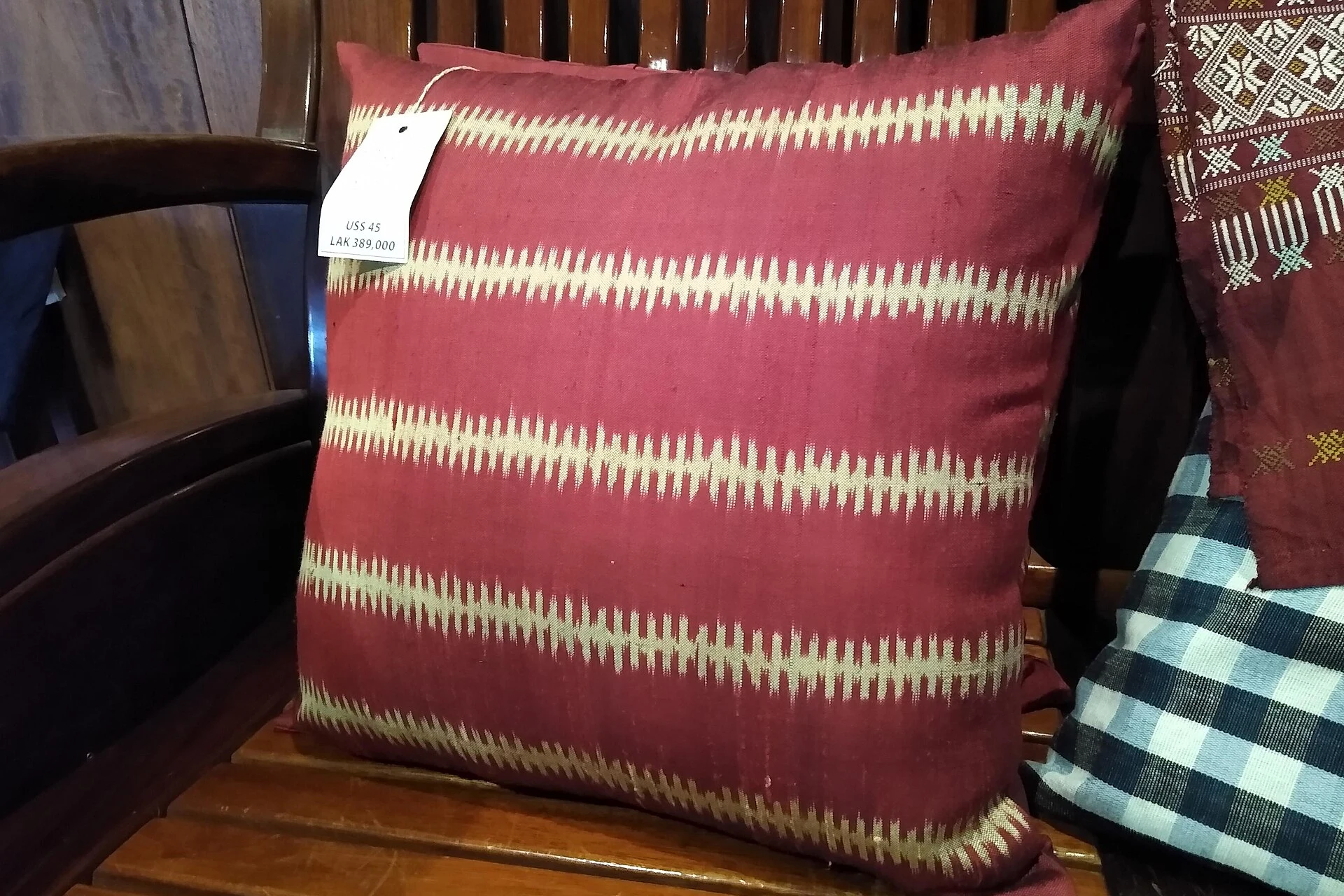

Before paying for a woven throw, open a note on your phone and write four headings: material, measurements, care, maker. Those details will be harder to recover once the throw is on your sofa and the shop is several thousand miles away.
A purchase record does not have to be elaborate. Its job is to preserve what you were told, distinguish that from what you observed and expose any unanswered question that could affect how you use the textile at home. A lovely surface is a reason to look closer, not a substitute for knowing what you are buying.
Start with the job you want the textile to do
Give the piece a specific role before discussing its story. Will it cover the end of a bed, sit over a chair, become a table runner or be worn as a scarf? Each choice gives you a different question to ask.
For a table runner, record the tabletop dimensions you need to cover. For a throw, decide whether you want a decorative fold or enough fabric to wrap around yourself. For a scarf, check the usable length rather than judging the folded display. If size is the deciding factor, measure rather than estimating from a photograph.
Ask permission before unfolding the piece fully. Note whether the measurements include fringe, tassels or other edging. A stated length without that distinction can leave you planning around fabric that is not actually there.
The same practical approach applies to checking a scarf’s size before giving it: decide what the dimensions need to accomplish.
Record the material without upgrading the claim
Ask, “What fibers is this made from, and are the proportions written anywhere?” Photograph the attached label if permitted. If the seller says “wool blend” but cannot give percentages, write exactly that—not “wool.”
Keep three kinds of information separate:
- Label text: the wording physically attached to the piece.
- Seller’s statement: an explanation given in conversation.
- Your observation: what you can see or feel, such as a loose weave or a raised surface.
“Soft,” “heavy” and “slightly glossy” are useful personal observations. They do not establish fiber content, age or a production method. Likewise, a handwritten tag can preserve a claim without proving it.
If you cannot read the label, save a clear photograph and copy any legible wording. Leave the translation unresolved rather than replacing unfamiliar terms with a confident guess.
Ask about care as a separate buying decision
“How should I clean this particular piece?” is more useful than “Is it easy to care for?” Ask whether written instructions are available, then preserve the full wording, including drying restrictions. Record any difference between the label and the spoken answer.
Do not borrow a washing method from another textile simply because both were described as wool. Woolmark’s care guidance directs washing according to the garment’s care claim; that is a useful boundary, not permission to treat every wool-containing souvenir alike.
If there is no label and no clear answer, write care not confirmed. You can still choose the piece, but assess whether that uncertainty fits its intended use. An occasionally displayed textile and an everyday table covering ask different things of your routine.
A purchase note is not a cleaning recipe. Avoid inventing a temperature, detergent or stain treatment to complete an empty field. Before cleaning an uncertain piece, seek instructions specific to it rather than testing a remembered tip.
Keep the maker, seller and place distinct
Ask who made the textile, who designed it if different, and whether that information is printed on a label, card or receipt. The person selling a piece may or may not be its maker. Record each role separately when it is known.
Also separate the place of purchase from the stated place of production. “Bought in this town” does not mean “made in this town.” A short, precise note preserves more than a sweeping description added later.
For example, write “Seller described it as handwoven; maker’s name not provided.” Do not turn that into “traditional work by a local artisan.” Leaving a gap visible is better than supplying a story.
If you are buying a gift, keep the care information with it and retain a copy of the purchase details. The gift receipt checklist offers a related way to keep transaction information separate from the present itself.
Use this one-minute purchase record
Copy this template before you browse. The sample entries are illustrative, not descriptions of a particular product.
- Item and intended use: striped textile; planned as a chair throw.
- Purchased from: shop name, location and date.
- Stated material: seller says wool blend; proportions unknown.
- Dimensions: record length and width, units and whether fringe is included.
- Care: copy any label or separate written instructions exactly; record spoken advice and who supplied it. Note any disagreement or mark care not confirmed if no clear instructions are available.
- Maker/designer: copy stated name and identify who supplied it.
- Production place: stated location or unknown.
- Attachments: receipt, label photograph and full-piece photograph.
- Open question: can the seller provide written care instructions?
Before leaving, read the note back against the actual piece. Check that the receipt and photographs belong to the textile you chose, especially if several similar ones were unfolded. This record preserves purchase information; it does not establish authenticity, export eligibility or provenance. Its immediate value is simpler: you return home knowing what was stated, what you checked and what still needs an answer.
Sources and editorial notes

Choose a Gallery Visit Order Around One Timed Booking
Work backward from one fixed exhibition time to choose a realistic gallery order. A hypothetical itinerary separates priorities, optional rooms and a buffer,…
Pack Worn Clothes Separately Without Losing Track of What Is Still Wearable
One laundry bag cannot tell you which worn clothes are ready for another outing. Use three suitcase zones, a temporary drying space and…

Photograph a Place Through Details, Not Just Landmarks
Build a six-frame travel photo story around a wide view, texture, lettering, color, an everyday object and a closing scene. Use a simple…