Match a Vase Opening to the Stems You Already Have
Move the same small arrangement through three vase shapes to compare spacing, support and silhouette. A simple observation card helps you choose a vessel without adding flowers or relying on fixed ratios.
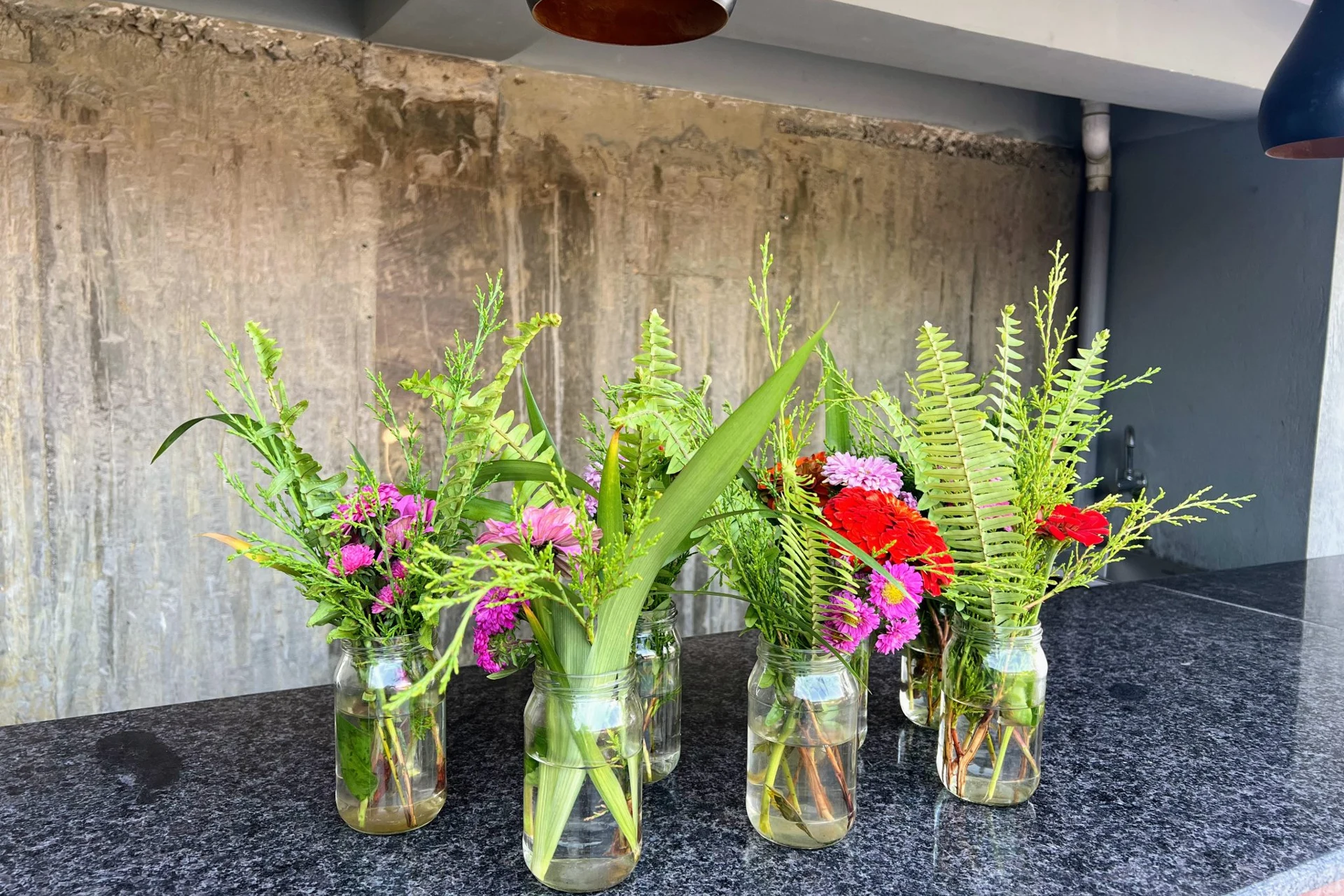
Place the same seven stems in three vases: one with a narrow neck, one with straight sides and one with a broad opening. Keep the stems at their existing lengths for the first comparison. Look at the gaps between the flowers and where the stems meet the rim.
This is an illustrative styling exercise. Seven stems is simply a manageable example, not a recommended quantity. Use the flowers and vessels you own to find the shape you prefer, without assuming that an arrangement needs more flowers whenever it looks sparse.
Read the arrangement you have
Before moving anything, describe what bothers you in visible terms. “The flowers look wrong” is difficult to act on. “Three heads lean toward the left edge” gives you a specific feature to compare in another vase.
Look separately at the stems near the opening and the flowers above it. You may like the spacing at the rim but dislike two flower heads overlapping. Or you may like the upper outline while finding the exposed stems too scattered for your taste.
Choose one goal for the trial: a compact cluster, a loose fan, or an uneven outline with one higher stem. These are personal composition choices. Keep that goal visible in a short note so that each new vase does not send you toward a completely different arrangement.
Set aside any vessel that cannot stand securely with the arrangement. Keep this exercise to composition and vessel choice; it does not prescribe plant care or changes to the stems.
Compare the opening with the stem bundle
Hold the stems loosely together near the height where they currently meet the vase opening. Notice the width of that relaxed bundle without squeezing it into a tight bunch. Then look at the opening you want to try.
You are comparing two visible shapes, rather than calculating an ideal ratio. Ask whether the opening leaves room to separate the stems as you want, or whether they already appear compressed before you begin arranging them.
For a worked example, imagine a relaxed bundle about 4 cm across and three vase openings measuring 5 cm, 8 cm and 12 cm across. Those numbers label the trial; they do not predict the finished result. Stem angles, the neck below the opening and the rest of the vessel’s shape still belong in the comparison.
If the opening is oval or irregular, note its narrower and wider directions. You may prefer the arrangement when the vase is turned. Mark the viewing side with a small note beside the vessel so you can repeat the position.
Move the same stems through three shapes
Place the vases on the same surface and assess them from the same position. Move the complete group between them, keeping the stem lengths unchanged. Allow yourself to reposition individual stems, but record what you move so the comparison remains useful.
| Vessel | What to inspect | Decision to record |
|---|---|---|
| Narrow-neck vase | Spacing at the neck and overlap between flower heads | Does the close grouping suit your intended outline? |
| Straight-sided vase | Stem positions at the rim and inside the visible body | Can you place the stems where you want them? |
| Broad-opening vase | Outward lean, gaps and the overall spread | Do you enjoy the open shape or want a tighter group? |
In one possible result, you might prefer the narrow neck because the flowers read as a single cluster. In another, the broad opening might give a loose arrangement you enjoy more. Record only what happens with your stems and vessels.
Do not force the bundle into a small opening. If you cannot place and reposition it comfortably, leave that vessel out of this trial.
Separate visible support from the silhouette
Once the stems are resting in a vase, loosen your hold and observe their positions. Note which stems meet the rim, which lean against another stem, and which move away from the group. This describes the support visible in your arrangement without assuming the opening alone explains it.
Then step back to your usual viewing distance. A group that looks crowded from directly above may have an outline you like from across the room. Conversely, carefully separated stems may still create an unwanted gap at the front.
Make one adjustment at a time. Rotate the vase, move one stem toward the centre, or exchange the positions of two stems. Look again before making another change. If every adjustment undoes the previous one, return to the vessel that gave you the closest starting shape.
For a dining table, inspect the arrangement from a seated position too. For a shelf, use the direction from which you normally see it. Choose the view that matters in that location.
Keep a vase-and-stem observation card
Save a short record of the combination you prefer:
- Stems used: quantity and a quick description.
- Vessel: identifying details and opening measurements.
- Desired outline: compact, open or deliberately uneven.
- Visible support: where the stems rest in this arrangement.
- Best viewing side: a sketch or reference photograph.
- Useful adjustment: the one move that improved the composition.
The card records one arrangement; a different bundle may lead you to choose another vase. Leave enough visual space to see the flower outline you chose, and reassess it from the same viewing position.
Does Your Bag Strap Work With Your Coat? Try These Everyday Movements
A bag can look right over a coat and still interrupt every pocket reach. Use this movement test to compare strap settings, seated…
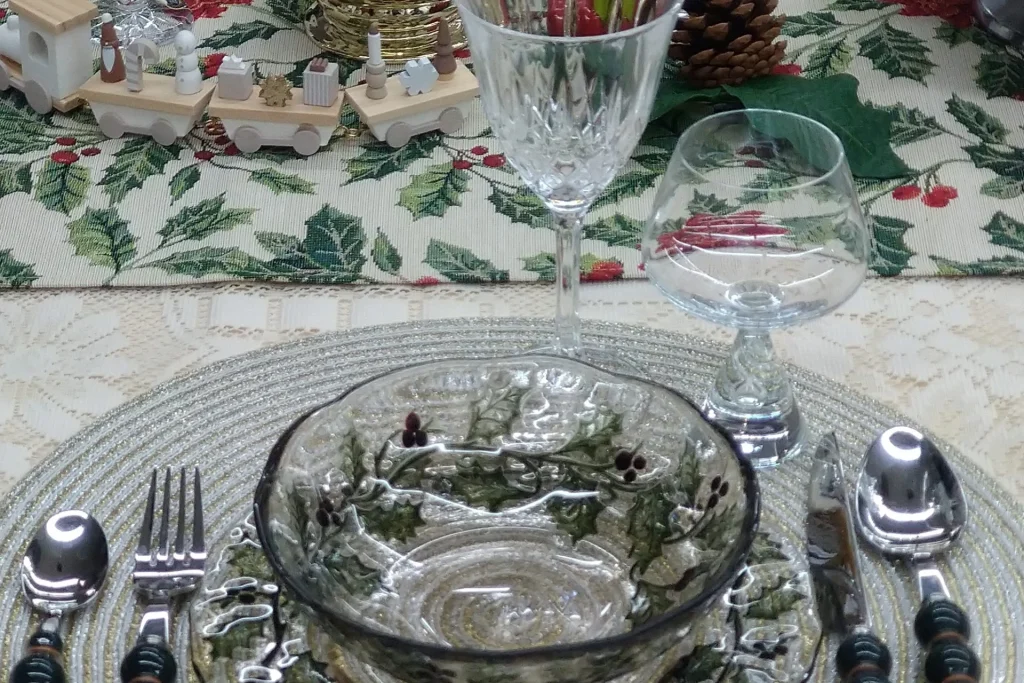
Choose a Table Runner Around a Centerpiece You Already Own
Use your existing centerpiece and everyday place settings to compare two runner widths. This measured paper-layout exercise helps you choose the visible border,…
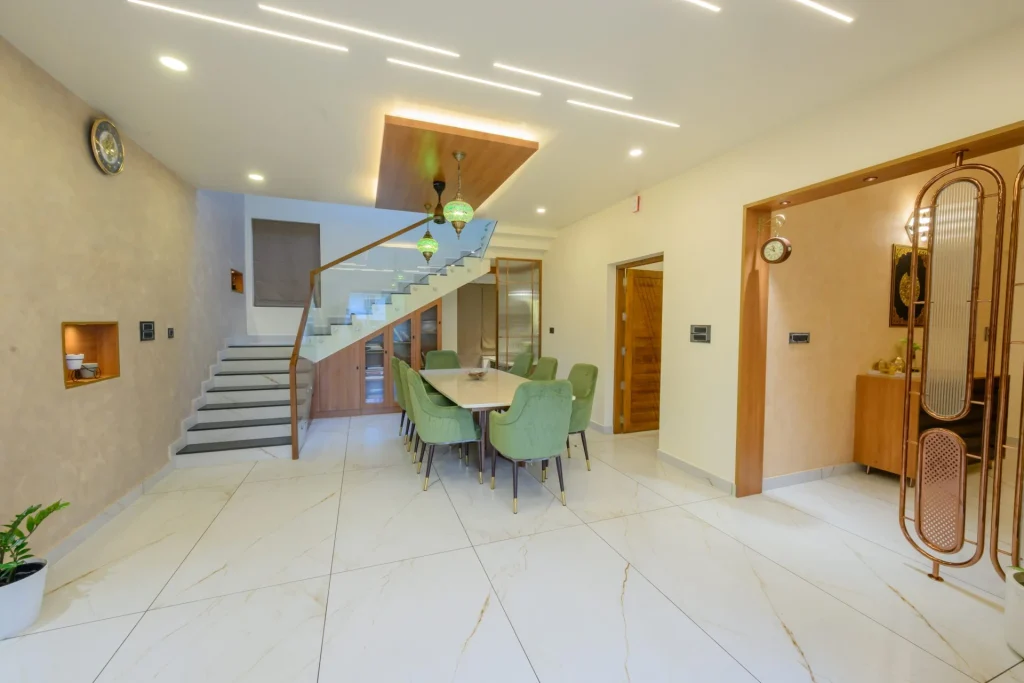
Mix Dining Chairs by Repeating One Visible Feature
Build a dining chair arrangement around one repeated detail, then check how each chair fits your table. A worked comparison board separates personal…