Mix Dining Chairs by Repeating One Visible Feature
Build a dining chair arrangement around one repeated detail, then check how each chair fits your table. A worked comparison board separates personal styling choices from measurements and everyday use.
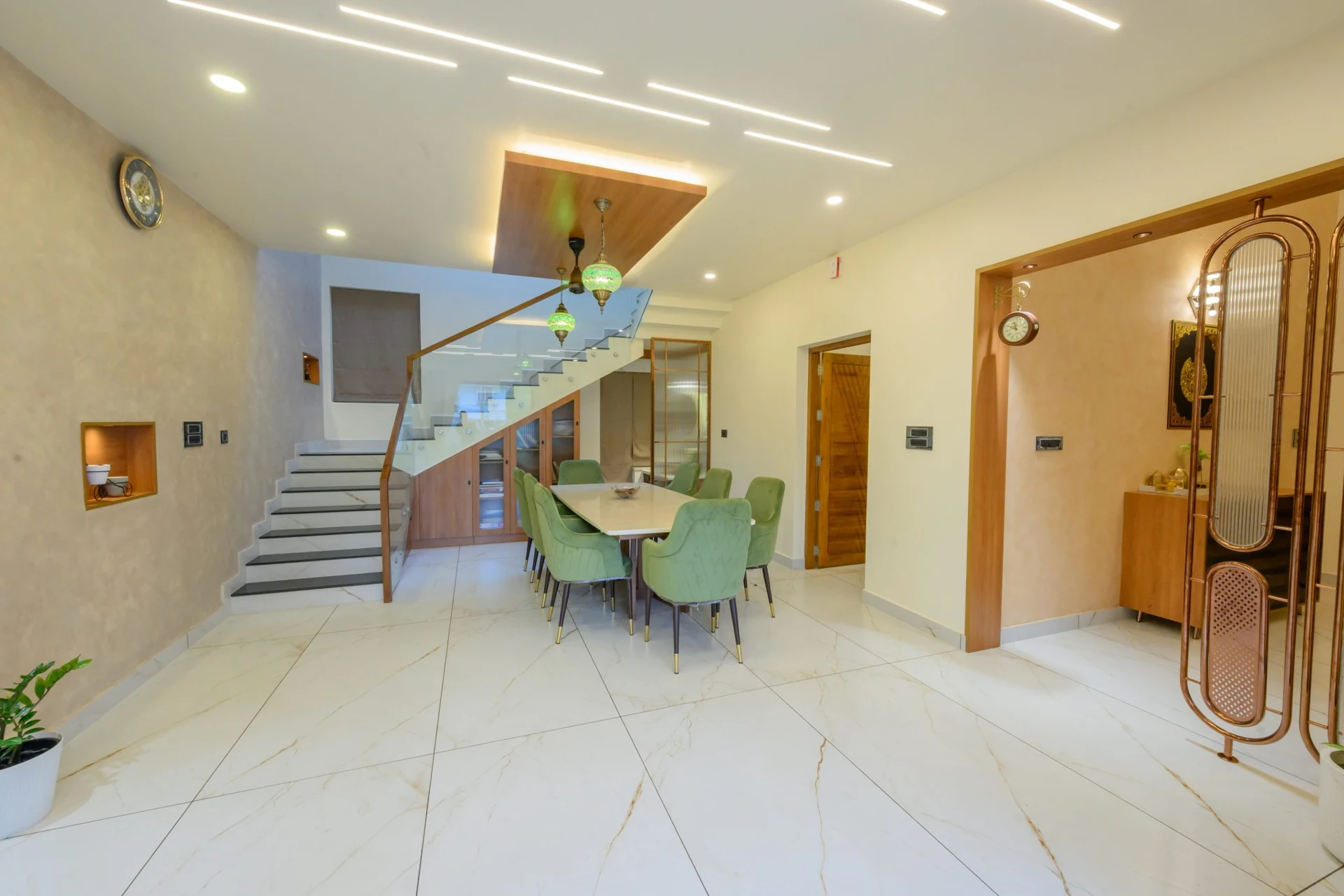
Imagine six chairs you already own: two dark wooden chairs with curved backs, two pale wooden chairs with curved backs, and two dark wooden chairs with straight backs. For this example, choose the curved back as the repeated feature and place those four chairs along the table’s sides. Try the straight-backed pair at the ends.
That arrangement gives you a specific idea to judge. You can decide whether you enjoy the repeated curves and the different end chairs. You do not have to make every wood tone, leg shape and seat finish agree before trying the group together.
Choose the feature you want to repeat
Look at the chairs away from the table first. List what you can actually see: a rounded top rail, a pale seat, dark legs, a fabric color or an open back. Select one feature that appears on more than one chair and that you would like to emphasize.
Keep the description narrow enough to be useful. “Wooden” may describe every chair while telling you little about the proposed arrangement. “A dark brown frame” or “a back with a broad curve” gives you something clearer to compare.
Wood tone, back shape and upholstery color are possible starting points, not a hierarchy. If the seats are mostly hidden beneath your table, you may prefer to work with the backs. If the chair shapes vary widely but several have blue seats, you might choose the blue as your connection.
Choose from what is present. There is no need to promise yourself a repainting or reupholstery project before you know whether you like the chairs together.
Make a comparison board from your own chairs
Take a simple photograph of each chair from roughly the same position, or make a written card if photographs are inconvenient. Identify duplicates as pairs. Place the images or cards together and mark the feature you intend to repeat.
This illustrative board uses the six chairs from the opening. The placement column records a trial arrangement, not a decorating rule.
| Chair group | Visible details | Chosen connection | Trial placement |
|---|---|---|---|
| Pair A | Dark wood; curved back | Repeated curved back | One on each long side |
| Pair B | Pale wood; curved back | Repeated curved back | One on each long side |
| Pair C | Dark wood; straight back | Dark tone also appears in Pair A | One at each end |
In this example, the curved backs are the main connection. The recurring dark wood is a secondary detail you may enjoy, but it does not need to become another requirement. Keeping one clear priority leaves room for differences you deliberately want.
If the board feels too busy to you, remove one group from the trial and look again. Record what bothered you specifically: perhaps the tall straight backs drew more attention than you wanted. “Too busy” becomes useful when you can name the detail behind it.
Record dimensions separately from appearance
A chair can belong in your visual plan and still be awkward at your particular table. Make a separate measurement sheet so an appealing photograph does not settle a question about fit.
Record actual measurements rather than assigning a universal target. Include any table apron or other obstruction below the tabletop when checking the space available.
| Item | What to record | What to try in place |
|---|---|---|
| Seat height | Floor to the top of each seat | Sit at the table and judge the position |
| Chair width | Widest part of each chair | Place neighboring chairs and use both seats |
| Arm height, if present | Floor to the top of the arms | Check whether the arms meet the table or apron |
| Space below the table | Floor to the lowest relevant obstruction | Check the seated position and chair movement |
| Room behind the chair | Space at its intended position | Pull it out and walk the route you use |
For upholstered seats, include a seated trial instead of relying on the empty-chair measurement alone. Note your own experience plainly: “comfortable at this table” or “arms prevent the position I want.” These notes do not need an aesthetic explanation.
Test two arrangements around the table
Put the chairs in the first planned arrangement and leave the tabletop mostly clear. Look from the doorway and from the places where you usually see the table. Then sit in each different chair type.
For a second version, move the straight-backed pair to opposite positions along the sides and put a curved-back pair at the ends. Keep everything else the same. Compare the two arrangements against your original intention: which one lets you enjoy the curved backs most?
Choose the version you prefer, then restore the things normally on the table. If you are also planning seasonal accessories, the guide to colorful Christmas decor within an existing interior is a related next step.
Write a decision that leaves useful limits
Finish your board with one sentence: “Keep the curved-back pairs along the sides, use the straight-backed pair at the ends, and leave the wood finishes as they are.” That is the completed styling decision for this example.
Your result might instead exclude a chair that you like visually because it does not work at the table. Keep that distinction in your notes. Repeating a color or shape cannot resolve an unsuitable seated position, insufficient room or a damaged chair.
If the group still does not appeal to you, change the selected feature or use fewer chair types. The exercise offers a way to make and test a personal choice; it does not guarantee that every collection of chairs will produce an arrangement you want to keep.

Does Your Bag Strap Work With Your Coat? Try These Everyday Movements
A bag can look right over a coat and still interrupt every pocket reach. Use this movement test to compare strap settings, seated…
Choose a Table Runner Around a Centerpiece You Already Own
Use your existing centerpiece and everyday place settings to compare two runner widths. This measured paper-layout exercise helps you choose the visible border,…
Plan a Gallery Wall With Paper Templates Before Making Holes
Compare three ways to arrange mixed-size frames using scaled paper shapes. A dimensioned example helps you judge the whole group before making installation…