Choose a Compact Mirror by Viewing Area, Hinge and How You Hold It
A compact mirror needs to work in your hand, on your table and inside your bag. Use a paper mock-up and a short handling test to decide which compromises suit your routine.
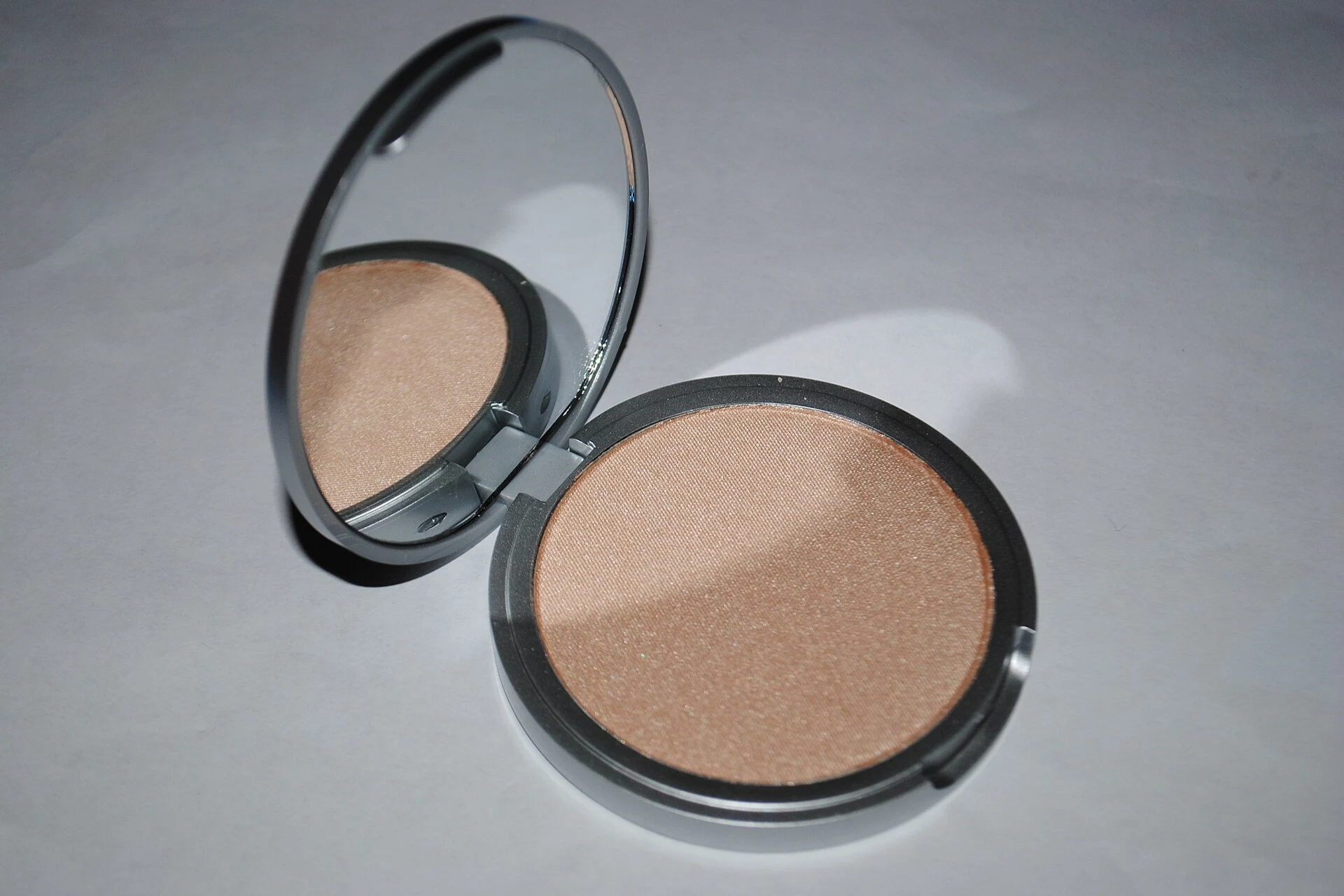

Cut out two paper shapes: one the size of a compact mirror you are considering, another the size of its reflective area. Hold them where you would normally hold a mirror. Notice where your thumb lands, how high you lift your arm and whether the shape feels awkward to keep facing you.
This will not tell you what the reflection looks like. It will give you a useful first answer: whether the size and hand position deserve a closer look. A compact can appeal to you as an object and still be inconvenient for the one job you carry it to do.
The exercise below uses illustrative preferences, not a universal ideal size. Your decision should follow your own routine: a brief check while out, a seated touch-up or a mirror you use with both hands otherwise occupied.
Give the mirror one main job
Write a single sentence before comparing designs: I want this mirror for checking lipstick while holding it in my left hand. Or: I want it to stand on a desk while I use both hands. Those are different handling requirements, even if the closed cases look similar.
Choose your most frequent situation, then name one secondary use. Trying to accommodate every possible setting makes it harder to identify the compromise you can comfortably accept.
- Brief handheld check: concentrate on opening, grip and a usable view without repeated repositioning.
- Seated tabletop use: concentrate on whether the mirror stays at the position you need on a level surface.
- Small-bag carry: concentrate on closed dimensions, shape and access among your actual belongings.
If the mirror must fit into an evening bag, use the same real-contents approach as the small evening bag test. Check it beside your phone, keys and other essentials rather than treating an empty bag as the test.
Separate the case size from the viewing area
Draw an outer line for the case and an inner line for the reflective area. Where dimensions are available, use those measurements. If only the outer dimensions are given, leave the inner area unconfirmed rather than guessing from a photograph.
Cutting out the inner shape creates a paper window. Hold that window at your usual mirror distance to explore how the border and your grip might occupy the space. Keep the exercise modest: paper cannot assess reflection quality, magnification or the actual view a finished mirror provides.
For the real mirror, ask a task-specific question. Can you see the area you want to check without moving the mirror more than you find comfortable? A person checking one small detail may accept a different viewing area from someone wanting a broader view.
Do not reject a substantial border automatically. You may prefer having somewhere to grip. Equally, do not assume a larger closed case gives you proportionately more usable mirror. Compare the part you will look into separately from the part you will carry.
Sketch the hand position and test the hinge
Make two quick side-view sketches. In the first, draw your palm beneath an open compact, your thumb against its edge and the mirror tilted toward your face. In the second, draw the compact resting on a table, with your hands away from it. Mark where the hinge needs to hold the lid in each position.
These sketches are prompts for a physical test, not engineering drawings. When you can handle the actual mirror, open it normally and try the positions you drew. Do not force the hinge beyond its intended movement.
- Open and close the compact using the hand you expect to use.
- Hold it by the case rather than deliberately gripping the reflective surface.
- Move it to your preferred viewing position and pause there.
- Check whether your fingers cover part of the view or need constant adjustment.
- Set it on a level table if freestanding use matters to you.
For tabletop use, sit where you would normally sit. A position that works while leaning over a shop counter may not suit your own desk. Reject a candidate if the intended setup requires propping it against an unrelated object when you specifically want a self-supporting mirror.
Compare two candidates with a decision card
Use words rather than a total score. A numerical average can hide a failure in the one function you need most. This example shows how two imaginary candidates might suit different routines; it does not describe particular products.
| Test | Candidate A | Candidate B |
|---|---|---|
| Handheld position | Comfortable in the preferred hand | Needs a grip adjustment |
| View for the chosen task | Acceptable after a small reposition | Acceptable without repositioning |
| Tabletop position | Does not hold the desired position | Holds the desired position in the test |
| Packed with essentials | Fits the chosen compartment | Fits only in the main compartment |
For a mainly handheld routine, A could be the preferred compromise. For seated use, B could make more sense. Neither wins independently of the job. Add your own non-negotiable beneath the table, such as must stand without support, and evaluate that before appearance.
Leave untested features unconfirmed
A paper model can help eliminate an inconvenient footprint. It cannot confirm weight, closure feel, hinge resistance or optical performance. Product photographs also cannot establish how a compact will sit in your particular hand.
If you cannot handle a candidate, record those unknowns explicitly. Seek a clear view of the open and closed design, confirm which measurements are being stated and avoid translating a picture into a promise about usability.
Finish with a three-line choice note: main job, acceptable compromise, unresolved question. For example: Handheld checks; willing to reposition slightly; hinge feel still untested. That is a more useful buying brief than simply asking for a small, attractive mirror.
Arrange a Makeup Bag So You Can See Every Product You Use
Arrange your everyday makeup around the order you use it, then test the layout with the bag open. A worked example shows how…
Compare Makeup Brush Shapes by the Mark They Make
Give the brushes you already own a simple comparison sheet. Three mark-making exercises help you describe width, direction and edge softness without treating…
Sheer, Creamy or Glossy? Describe the Lip Finish You Want Before Shopping
A color name leaves much of a lip look undecided. Build a more useful brief by separating visible coverage, surface shine and edge…