Style an Open Shelf by Leaving Deliberate Empty Space
An attractive collection can still feel crowded when every object competes for its own space. Try a three-pass shelf edit that removes, groups and shifts what you already own.
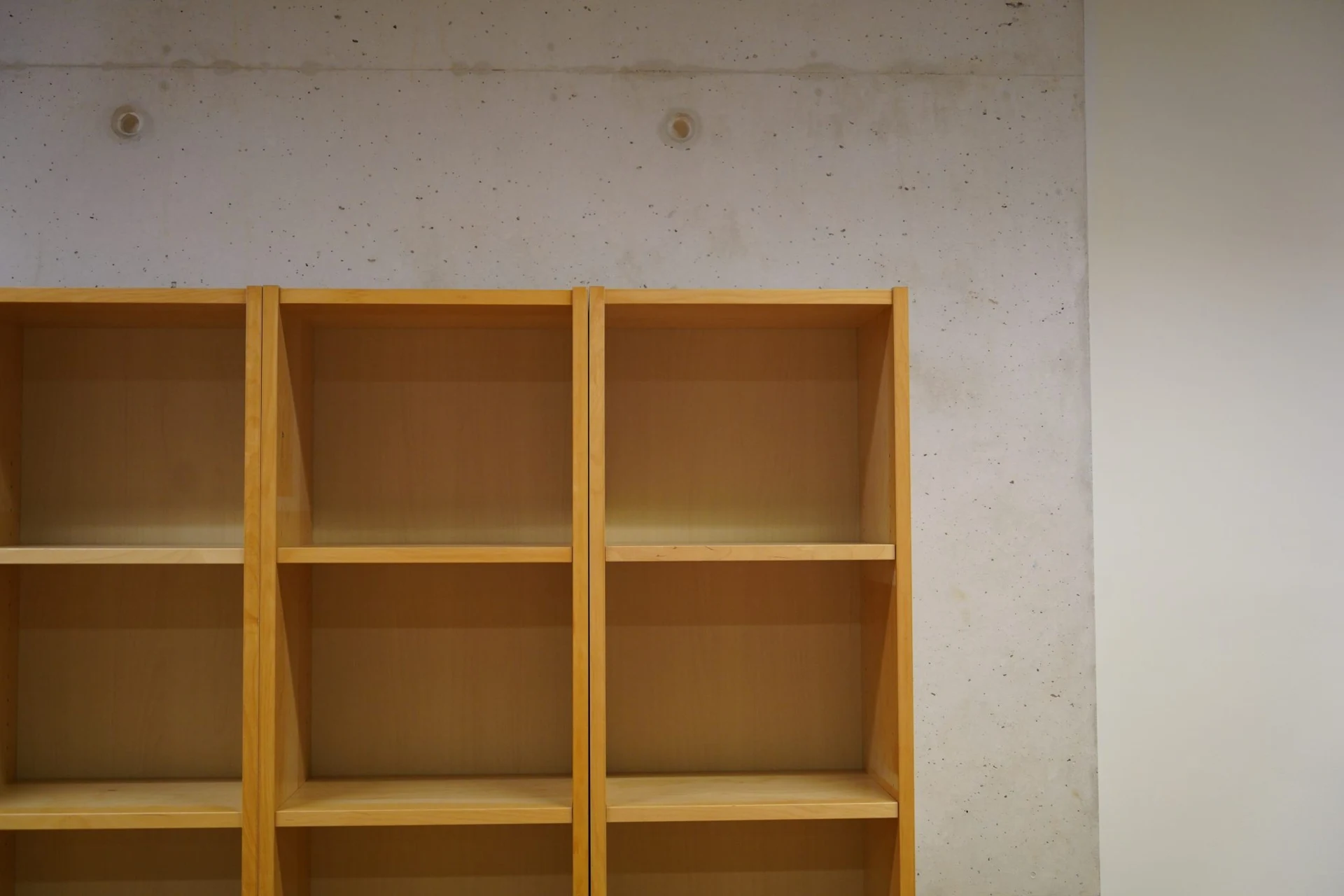
Take the small ornament out from between the books and the vase. Leave that patch of shelf bare. Before moving anything else, step back to your usual view of the room and decide whether you prefer the new separation.
That single removal is the starting point for this shelf-styling exercise. You do not need another decorative object. You need a way to judge the relationships between the objects already there, including the unoccupied shelf around them.
A shelf can feel crowded to you even when you like everything on it. In the illustrative arrangement below, the issue is that each object claims a separate position across the whole width. The edit changes those positions without treating any object as a bad purchase.
Draw the shelf as it looks from the room
Choose one shelf, not the entire unit. Look at it from the doorway, sofa or chair where you usually see it. On a scrap of paper, draw a long rectangle for the shelf opening. Add rough blocks for books, a tall outline for a vase and small marks for the other objects.
This is a front-view shelf elevation, not a measured plan. Its job is to record where the objects sit and where the gaps fall. Include the space above short objects as well as the visible shelf beside them.
For our example, imagine a shelf holding an upright run of books, a ceramic vase, a small framed picture, a bowl and a decorative ornament. All five occupy separate positions. Draw that starting point before changing it, so you have something concrete to compare with the edited version.
Work within the shelf’s existing limits. Do not move brackets or alter the unit for this exercise. If an arrangement requires uncertain support or leaves something projecting awkwardly, choose another placement.
Pass one: remove objects before rearranging them
Set the ornament and bowl aside. Keep them on a nearby surface rather than deciding immediately whether they should leave the room. The first pass is a temporary edit, not a decluttering verdict.
Now look at the remaining books, vase and picture. Resist the urge to spread them out to cover the newly exposed shelf. Draw the empty patches on your elevation with the same attention you give the objects.
Ask a specific question: which item would you miss seeing here? If the bowl matters more than the picture, swap them. If the books are used often, preserve their accessible position. A display that requires moving the vase every time you take out a book may not suit this shelf’s everyday job.
Where the shelf mainly stores necessities, reduce the scope of the exercise. Edit one display area rather than pretending the entire shelf can remain sparse. The aim is a layout you can keep, not a photograph that lasts until you need something.
Pass two: make a few readable groups
For the example, place the books together at the left and the framed picture beside them, facing outward. Leave the vase on the right with a visible gap between it and the book-and-picture group. These are two groups, rather than three unrelated stopping points.
The picture does not need to sit in front of the books. If that blocks titles you want to read or makes removal awkward, keep it beside them or leave it off this shelf. Grouping is a visual choice, not permission to obstruct useful objects.
Use this drawing key to record the three-pass edit. The exact widths and positions are illustrative, not a styling formula.
| Stage | Draw from left to right | Decision to test |
|---|---|---|
| Starting shelf | Books | vase | picture | bowl | ornament | Does every object feel like a separate stop? |
| Remove | Books | vase | picture | empty area | Do you miss the bowl or ornament? |
| Group | Books and picture | clear gap | vase | Can the books still be used easily? |
| Shift | Books and picture | wider gap | vase | small end gap | Does the open area look intentional to you? |
Pass three: shift the groups, not every object
Move the book-and-picture group slightly left and the vase slightly right, while keeping both comfortably supported. You are adjusting the gap between groups, not inventing a new position for every item.
Try one version with the vase nearer the middle and another with it farther out. Return to your normal viewing point after each change. Choose the version in which the empty area feels like part of the arrangement to you, rather than a missing object.
You do not need equal gaps, a centered vase or a prescribed number of objects. Those may be useful personal preferences, but they are not requirements of this exercise. If you prefer a fuller shelf, restore one object and repeat the grouping test.
For a seasonal change, use the same replacement approach: exchange an object rather than automatically adding another. Colorful Christmas decor without changing your whole interior offers a related direction when you want to change the room’s seasonal emphasis.
Keep the empty space through ordinary use
Leave the drawing nearby for a few days. When a new object lands on the shelf, compare the result with the version you chose. Decide whether the addition improves the arrangement or merely occupies the gap.
Give the removed objects an actual destination: another display, a cupboard or a box you will review. A pile directly below the edited shelf only moves the unfinished decision.
Finally, use the shelf. Take out a book and put it back. Check the view while seated, not only while standing directly in front of it. Keep the version that supports those ordinary moments, even if its gaps are uneven or its object count differs from the example.

Does Your Bag Strap Work With Your Coat? Try These Everyday Movements
A bag can look right over a coat and still interrupt every pocket reach. Use this movement test to compare strap settings, seated…
Choose a Table Runner Around a Centerpiece You Already Own
Use your existing centerpiece and everyday place settings to compare two runner widths. This measured paper-layout exercise helps you choose the visible border,…
Mix Dining Chairs by Repeating One Visible Feature
Build a dining chair arrangement around one repeated detail, then check how each chair fits your table. A worked comparison board separates personal…