Can Wool Go in the Washing Machine? Start With the Care Label
A wool cycle does not tell you whether a garment belongs in the machine. Use this label-led decision guide, with three hypothetical examples, to choose a care method and recognise when to pause.
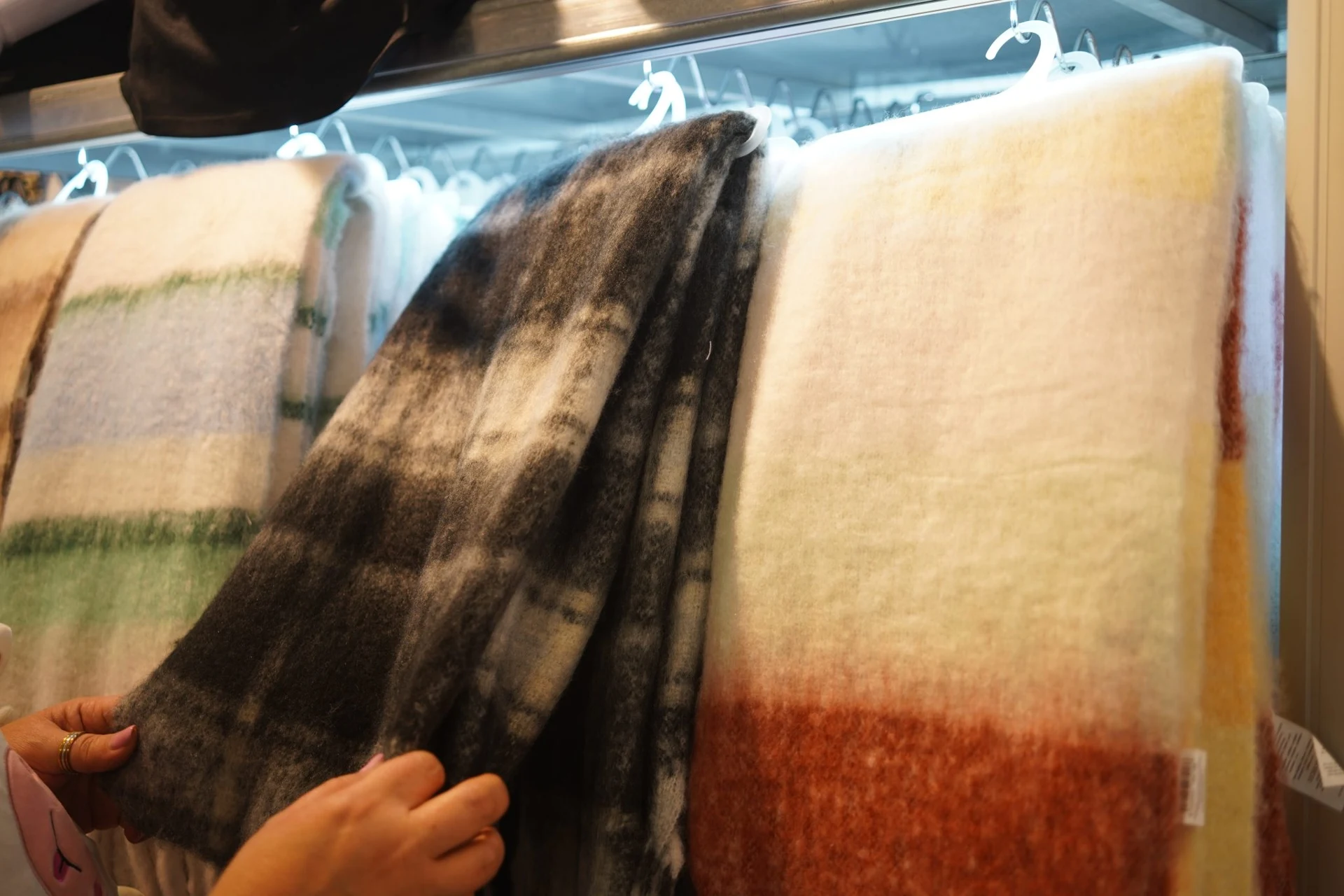
A sweater labelled “machine washable” and a sweater labelled “hand wash only” lead to different decisions, even if both contain wool. The useful first step is to find the garment’s care instructions before touching the washing-machine controls.
Many wool garments can be machine washed. That does not make the wool cycle permission to wash every wool item you own. Use the label to choose the cleaning route, then work out the settings, detergent and drying arrangements that route requires.
Read the whole care label first
Find the sewn-in label and read all its care instructions. Separate the fibre information from the cleaning directions: knowing that a garment contains wool does not tell you which washing method its maker permits.
Look for the washing method, any stated temperature, drying instructions and restrictions. If the instructions use symbols you cannot confidently interpret, resolve those before starting. A partially understood label is an unfinished decision.
Write the instructions down together. For example: “Machine wash on wool programme; maximum temperature as labelled; dry flat.” This is a personal reminder, not a replacement for the label. Keep any qualifications rather than shortening the note to “washable”.
If you are checking a newly delivered item, include the label in your check that the clothing order matches what you bought. An unexpected care requirement deserves attention before the garment joins your usual laundry routine.
Follow this label-led decision tree
Use this branching checklist with the garment in front of you. Each route starts with an explicit instruction; none starts with how soft, thick or familiar the knit feels.
- Does the label clearly permit machine washing? If yes, follow its programme, temperature and drying directions. Then check that your machine can provide the required settings.
- Does it specify hand washing only? Choose the hand-wash route. Do not substitute a machine programme simply because its name includes “hand wash”.
- Does it say dry clean only? Set it aside for professional cleaning and show the cleaner the label.
- Is the instruction missing, unreadable or unclear? Pause. Ask the maker for care guidance for that exact garment before choosing a method.
Keep the final branch available even when you are in a hurry. “I cannot establish the method yet” is a useful outcome. It gives you a specific next action instead of turning uncertainty into an experiment.
Compare three hypothetical labels
These examples illustrate how to make the decision. They are invented labels, not instructions for any garment in your wardrobe.
| Example label | Cleaning route | What to establish next |
|---|---|---|
| A: Machine wash on wool cycle, maximum 30°C; dry flat | Machine washing is permitted within those instructions. | Check the selected programme and temperature, then prepare a flat drying place. |
| B: Hand wash only; dry flat | Plan to wash by hand. | Read any further instructions and prepare the washing and drying spaces. |
| C: Dry clean only | Arrange professional cleaning. | Keep the label available and discuss any particular cleaning concern with the cleaner. |
Example A does not authorise a warmer wash because a machine’s wool programme offers one. Example B does not authorise machine washing because another sweater tolerates it. Example C gives a different cleaning route altogether.
If Example A’s label had faded until only “30°C” remained readable, the temperature alone would not settle the method. Treat the missing information as a reason to ask, rather than filling it in from memory.
Choose settings only after establishing permission
For wool garments whose care instructions permit machine washing, a wool programme is the relevant starting point. General wool-care guidance describes this as usually using gentle action at 40°C, but that general description must not override a lower temperature or another restriction on your garment.
Check the settings shown on the machine before starting. In the hypothetical 30°C example, confirm that the selected programme respects 30°C; the programme name alone does not answer that question.
A neutral, mild detergent is recommended in general wool-washing guidance. Read the garment’s directions alongside the detergent instructions instead of assuming a familiar product is suitable.
Drying needs its own decision. Flat drying is generally recommended for wool after washing, but keep the garment’s specific directions in view. Permission to machine wash does not, by itself, establish permission to tumble dry.
Make a care note—and stop where it has blanks
Copy this short record into a phone note or onto a laundry card:
- Garment: enough detail to identify this particular item.
- Permitted cleaning method: the wording from the label.
- Programme and temperature: only where applicable and established.
- Drying instructions: recorded separately from washing.
- Question to resolve: any missing or conflicting instruction.
A useful question to the maker is: “The care label on this item is unreadable. Can you confirm its cleaning and drying instructions?” Include the product name or identifying details you have.
Leave the garment out of the wash while that question remains open. Once the method is clear, finish the note and keep it with your laundry reminders so you can repeat the decision without relying on recollection.
Sources and editorial notes
What to Wear Under a Sheer Top: Compare Coverage, Edges and Necklines
Choose an underlayer by deciding what you want visible, then checking straps, neckline and hem. A simple visibility map and three illustrative outfits…
One Square Scarf, Three Folds: Choose by the Fabric You Want to Show
A narrow band, broad triangle and loose rectangle reveal different parts of the same square scarf. Try this tabletop comparison to choose the…
How to Dry a Wool Sweater Flat When You Have Limited Space
Plan a supported drying footprint before washing your wool sweater. This small-space guide combines label-led care, gentle reshaping and a measured layout so…