How to Look Closely at a Textile in a Museum
Spend five minutes with one displayed textile using a simple observation card. Notice pattern, edges and surface, then distinguish your own descriptions from the information given on the museum label.
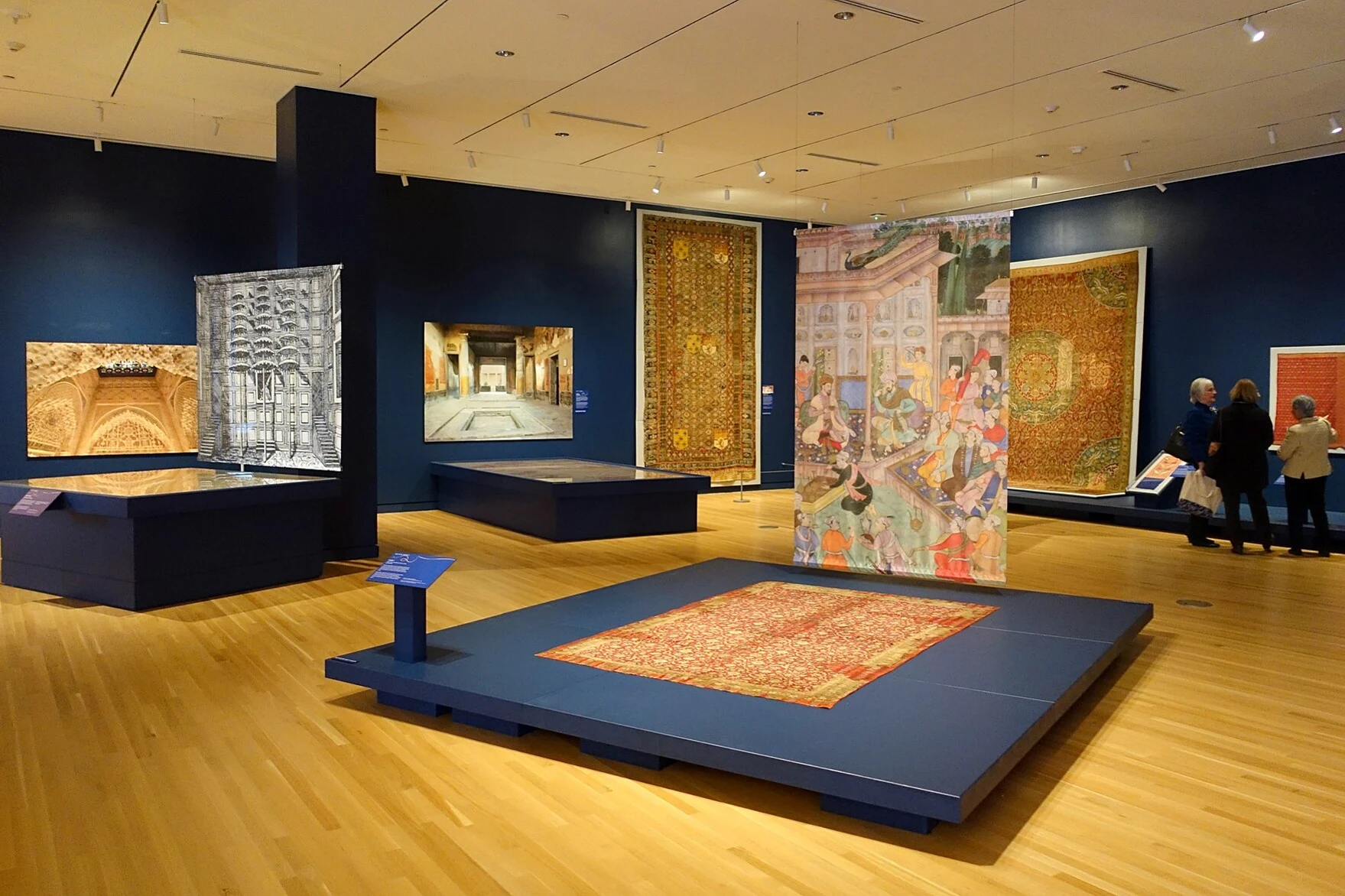

“Red shapes repeat across a pale ground. A narrow border runs along the lower edge. Small lines cross inside the shapes.” Those three sentences could begin a useful note about a textile without naming its technique, date or place of origin.
At your next museum visit, choose one displayed textile and spend five minutes describing what is visible. Use ordinary words first. Keep a second space for information from the label, so a detail you notice does not quietly turn into a claim about how or where the object was made.
Start with the whole field of pattern
For the first minute, look at the textile as a whole from a position the display allows. Notice where your eye goes first. Is there a large central shape, a row of similar forms, an empty area or a strong border?
Choose one shape and look for it elsewhere. You might describe “three branching forms across the top” or “small squares between larger circles.” If you cannot follow a repeat across the whole object, write that down. You do not need to complete a pattern that is folded, covered or difficult to see.
Keep color descriptions simple and tied to your view: “looks dark blue from here” is a useful note. If a reflection interrupts the surface, change your viewing position within the permitted space. Avoid filling in a hidden area from what you expect the design to do.
You can also sketch a few shapes as a memory aid where drawing is permitted. The sketch only needs to preserve the relationship you noticed, such as a small motif between two larger ones.
Follow an edge and inspect one small area
Use the second minute for an edge. Look for a visible border, a change of pattern, a fringe or a folded section. Describe its position before trying to explain its purpose: “a plain strip along the left side” is more precise than “the unfinished side” when you do not know whether it is unfinished.
Spend the third minute on one small patch of surface. Notice lines, raised areas, openings or changes in color. If separate threads or stitches are visible, describe their direction and arrangement. If they are not clear enough to distinguish, stay with a broader description.
For example, “short pale marks sit above the darker area” records something you can look for again. Calling those marks a particular kind of stitch would add an identification. Wait for the label to supply that term, or leave the technique unnamed.
Use only the views available to visitors. You do not need to see the reverse, handle the cloth or get closer than the display permits to make a worthwhile observation.
Read the label as a separate layer of information
In the fourth minute, read the label and copy the details that answer your questions. Keep its wording for names, materials and techniques, especially when a term is unfamiliar. Preserve qualifications such as “about,” “possibly” or a date range.
Divide your note into “I can see” and “The label says.” A visible blue area belongs in the first category. A named dye, fiber or place of production belongs in the second when the label identifies it. Seeing a color alone does not establish those details.
Then compare the two columns. Perhaps the label names a technique that helps you revisit the small lines you noticed. Perhaps it discusses a use or history that you could not have determined by looking. Neither column has to repeat the other.
If the label leaves a question unanswered, retain it as a question. “Was this border made separately?” is an honest and useful note; “the border was added later” would require an identification you have not made.
Use a five-minute observation card
Copy this card into a notebook before your visit. The entries are invented examples of descriptions, not information about a particular museum object. Change the timing freely if one detail holds your attention.
| Time | Prompt | Example note |
|---|---|---|
| Minute 1 | What repeats across the whole textile? | Branching shapes alternate with small circles. |
| Minute 2 | What happens at one visible edge? | A narrow band runs below the main pattern. |
| Minute 3 | What can I describe in one small area? | Pale lines cross inside one dark shape. |
| Minute 4 | What does the label identify? | Copy the stated material and technique here. |
| Minute 5 | What changed when I looked again? | The small circles have different centers. |
Under the card, add the object title or identifying number if available, followed by one unanswered question. Keep your observations separate from copied label text. A short record with that distinction is more useful for a later visit than a long paragraph in which the two become mixed.
Choose one detail to follow after the visit
In the final minute, return to the textile and check one observation. Can you find the repeated shape again? Does the edge continue as far as you first thought? Correct the note if necessary; the point is to make it more exact.
If you want to continue at home, use the object’s recorded identifying details. The V&A collections search offers fields including title or object type, artist or maker, materials or techniques, place of origin and accession number. These provide several ways to search when you have copied the corresponding information.
For a future activity, consider whether you want more time looking at objects or a session making something yourself. The guide to choosing between a gallery class and a fashion workshop explores that choice.
Your card will remain a partial record. A case, mount, fold or viewing distance may leave parts unseen. Mark those limits directly, and keep the one detail you can describe with confidence.
Sources and editorial notes
Build an Occasionwear Reference Folder From Your Own Photos
Turn a handful of event photos into a useful dressing reference. Record venue, invitation wording and combinations you actually wore, then add the…
Build a Visual Glossary From Five Details in One Museum Object
Use five details from one object to build a visual glossary you can revisit. Pair small drawings with plain descriptions, verified terms and…
What a Fashion Plate Can—and Cannot—Tell You About Clothing
A drawn sleeve can reveal a silhouette without explaining its construction. Use a simple evidence table to separate visible details, printed descriptions and…