How to Mix Two Patterns by Comparing Scale and Spacing
Compare motif size, spacing and shared color before deciding whether two prints belong together. A stripe-and-floral example and pairing matrix turn pattern mixing into a practical wardrobe test, without rigid rules.
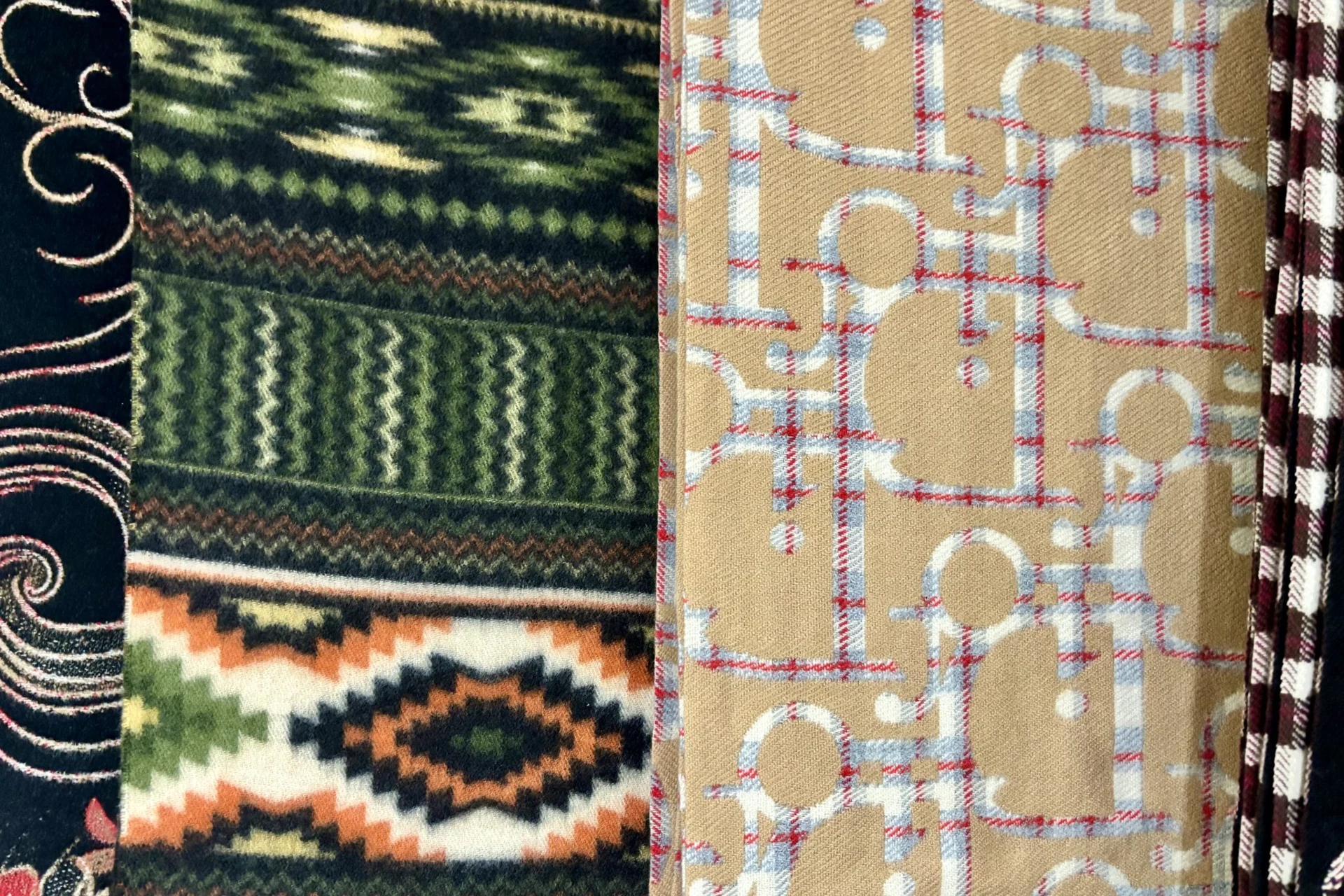
Lay a navy-and-cream striped shirt beside a floral skirt. Before deciding whether they work together, describe what you can see: narrow stripes with regular gaps; large flowers with space between them; navy appearing in both pieces. Those observations give you something more useful than “prints clash” or “prints match.”
Then put the garments on. The aim is to choose a combination you enjoy, not to pass a pattern-mixing test. The comparisons below are a practical styling exercise, and the stripe-and-floral outfits are illustrative examples rather than prescribed formulas.
Separate motif size from spacing
Start with the individual repeated element. In a floral, that might be a flower head, a cluster of flowers or a whole sprig. Choose the unit that seems most obvious to you and describe its approximate size. You do not need a specialist label or a ruler unless measurements help you compare.
For stripes, note both the width of the colored bands and the gaps between them. Calling a shirt “small-scale” can hide the difference between fine lines placed close together and fine lines separated by broad areas of plain fabric.
Next, look at spacing: how much background can you see between the motifs? Two floral fabrics can have similarly sized flowers but very different amounts of open space. Record these as separate observations rather than assuming a larger flower always means a busier print.
Use everyday descriptions such as “large flower clusters, plenty of cream background” or “tiny flowers, almost no visible background.” The point is to recognize why two garments feel different to you.
Make a pairing matrix before choosing a winner
Keep one patterned garment fixed and compare two possible partners. That gives the exercise a clear question: which partner do you prefer with this particular piece?
| Feature | Fixed striped shirt | Floral skirt A | Floral skirt B |
|---|---|---|---|
| Motif size | Narrow navy bands | Large flower clusters | Small flowers |
| Spacing | Regular cream gaps | Open cream areas | Closely packed motifs |
| Shared color | Navy and cream | Navy petals, cream background | Cream details among several colors |
| Question to test | Keep unchanged | Do I like distinct motif sizes? | Do I enjoy both prints looking detailed? |
This matrix does not award points. Shared navy is a connection you can test, not proof that skirt A is correct. Closely packed motifs are a description, not a warning.
If your garments do not share a color, leave that entry as “none.” You can still like them together. Do not invent a near-match simply to make the worksheet look complete.
Work through the stripe-and-floral example
Try the striped shirt with skirt A first, using plain shoes and leaving extra patterned accessories aside. Look at the outfit from far enough away to see it as a whole, then step closer to examine the point where the garments meet.
In this example, the stripes are narrow and repetitive while the flower clusters are larger and separated by visible background. You might like being able to distinguish the two kinds of mark immediately. The navy in both garments may also be a detail you enjoy repeating.
Now replace only the skirt with skirt B. Its flowers are smaller and more closely packed. Ask whether you like seeing detail across both garments, or whether you prefer the more open areas in skirt A. Neither answer establishes a general rule about mixing small prints.
Take two full-length photographs with the shirt styled the same way. A full tuck in one image and a loose shirt in the other changes how much of each pattern is visible. Keep that variable steady until you have chosen the pairing.
Build a quieter alternative deliberately
Suppose you like the idea of stripes and flowers but find both trial outfits too active for your taste. Keep the shirt and look for an existing floral piece with more visible background or fewer colors. These are possible adjustments to compare, not guaranteed ways to produce calm.
A hypothetical quieter partner might have widely separated navy flower outlines on cream. Compared with skirt B, it gives you more plain background and a shorter color list. If that is what you wanted, write exactly that in your notes.
Alternatively, keep the floral skirt and reduce how much striped fabric is visible beneath a plain jacket. This changes coverage rather than the print itself. Test it with the jacket open and closed if you expect to wear it both ways.
For a layering option, the utility jacket styling exercise is a relevant next step. Choose the two-print combination first so the jacket is a deliberate addition, not another unresolved variable.
Record the pairing and its limits
Save a photograph with four notes: the two garments, motif sizes, spacing, and what you liked when wearing them. An illustrative entry is: “Striped shirt plus open floral skirt; narrow bands against large clusters; repeated navy; prefer this with plain shoes.”
Check the outfit sitting down as well as standing. Pleats, folds and a jacket opening can change which parts of a pattern remain visible. A small fabric sample is useful for an initial comparison, but it cannot show the full arrangement on a garment.
Stop once you have a pairing you want to wear. You do not need to add a third pattern or matching jewelry to demonstrate confidence. Keep the matrix for the next uncertain combination, and let each new pair earn its place through the same specific observations.
Sources and editorial notes
What to Wear Under a Sheer Top: Compare Coverage, Edges and Necklines
Choose an underlayer by deciding what you want visible, then checking straps, neckline and hem. A simple visibility map and three illustrative outfits…
One Square Scarf, Three Folds: Choose by the Fabric You Want to Show
A narrow band, broad triangle and loose rectangle reveal different parts of the same square scarf. Try this tabletop comparison to choose the…
How to Dry a Wool Sweater Flat When You Have Limited Space
Plan a supported drying footprint before washing your wool sweater. This small-space guide combines label-led care, gentle reshaping and a measured layout so…