Where Should Your Trousers End? Compare Three Hem Lengths With Your Own Shoes
Compare a clear ankle, clean shoe contact and a soft break using the trousers and footwear you already own. A simple recording sheet helps you choose a length without relying on a universal rule.
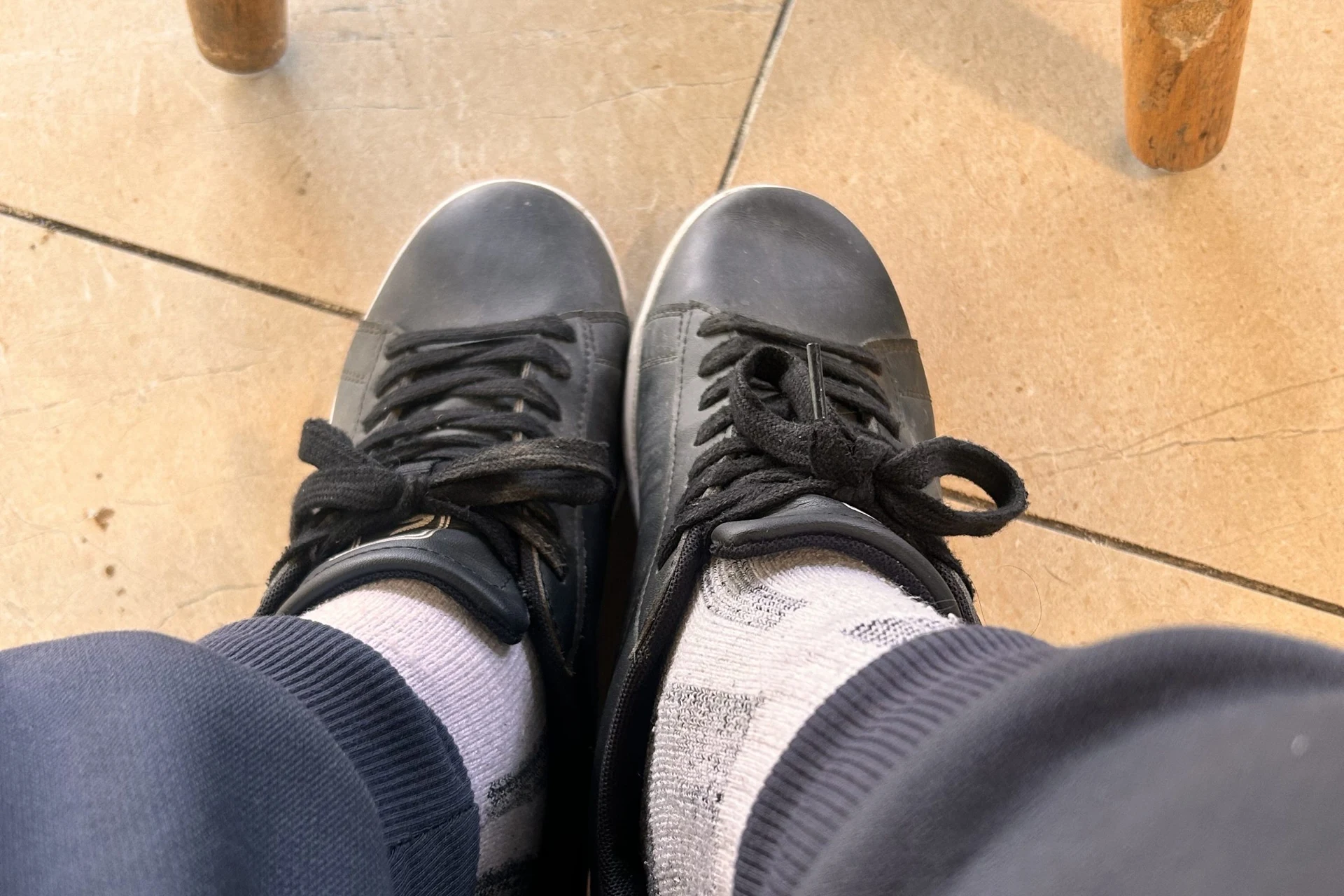
Put on your trousers and your most-worn shoes. Fold one hem so it clears the shoe, then lower it until it meets the upper. Finally, let it sit low enough to make a small fold at the front. Those three positions give you a useful comparison before you commit to an alteration.
The question is not which length is correct for everyone. It is which version you like with the footwear you actually reach for—and whether that choice still works when you walk and sit. Treat this as a personal styling exercise, not a set of tailoring rules.
Set up a comparison you can repeat
Choose one pair of trousers and two pairs of shoes you regularly wear with them. Loafers and simple sneakers make a useful example, but use your own combinations. Keep the top, belt and waistband position unchanged throughout the test.
Start with the trousers sitting where you intend to wear them. Do not pull the waistband higher to manufacture a shorter hem, then let it drop for the next photograph. You want to compare hem positions, not two different ways of wearing the trousers.
Use a mirror that shows the full outfit. If taking pictures, keep the camera position and your standing spot consistent. Include your waist and shoes rather than photographing only the last few inches of fabric: you are choosing the lower edge of a whole outfit.
For a rough visual comparison, fold the fabric inward. Secure temporary folds only in a way suitable for the garment, and remove any exposed pins before moving. If the fold will not stay put without distorting the leg, ask someone to hold it for a stationary comparison instead.
Give each of the three positions a clear meaning
Clear ankle: raise the hem until there is a visible gap between its edge and the shoe. You decide how much ankle or sock to show. Record that choice rather than assuming that “cropped” describes one exact length.
Clean shoe contact: lower the hem until the front just meets the shoe upper, without an obvious fold in your standing view. Check the back separately. A front view alone does not tell you whether the rear edge is sitting where you want it.
Soft break: lower the hem a little farther so the fabric makes a small fold where it meets the shoe. For this exercise, stop before the folds become the main thing you notice. If you prefer a more gathered look, record that as a separate option rather than stretching this label.
These are working descriptions for your comparison. They are not fixed measurements. Repeat the three positions with each shoe rather than assuming that one folded length creates the same result with both.
Record the pairing, not just the hem
Use the sheet below on your phone or copy it onto paper. The entries are illustrative personal judgments, not recommendations for how loafers or sneakers should be worn.
| Shoe and position | Standing impression | Movement check | Personal decision |
|---|---|---|---|
| Loafers: clear ankle | I like seeing the sock. | Check the seated view. | Keep as a candidate. |
| Loafers: clean contact | I prefer the uninterrupted front. | Check whether the hem catches. | First choice for this shoe. |
| Loafers: soft break | More fabric than I want here. | Check the rear edge. | Set aside. |
| Sneakers: clear ankle | More shoe is visible than I prefer. | Check while seated. | Set aside. |
| Sneakers: clean contact | A useful middle option. | Walk and turn. | Compare with soft break. |
| Sneakers: soft break | I like this fuller outline. | Check for dragging or catching. | Keep if movement works. |
Replace broad notes such as “better” with something visible: “I want less sock showing” or “the back edge sits lower than I like.” That wording makes your preference easier to reproduce later.
Make the final comparison in motion
Once the temporary hem is secure and free of exposed pins, walk a few steps, turn and sit. Look at whether the hem catches on the shoe, touches the floor or needs repeated adjustment. Then stand naturally again without arranging the fabric for the mirror.
Try your usual socks as part of the outfit. If one length appeals only with a particular sock, that is useful information—not a reason to reject it automatically. Label it as a specific pairing rather than your all-purpose trouser length.
For an outfit built around dressier footwear, you can also use the shoe comparison prompts in the kitten-heel choosing guide. Return to the full outfit before deciding on the hem.
Choose a priority before making a permanent change
If your two shoes favour different lengths, decide which pairing matters more. You might choose the length for your everyday loafers and accept a different look with sneakers. Or you might keep these trousers for one shoe and leave another pair longer.
A temporary inward fold is an approximation. It does not establish how a finished alteration will look, and this exercise does not tell you whether extra length is available. Avoid cutting fabric to test an idea.
Save one front photograph, one side photograph and the name of your preferred shoe. Take the shoes and your notes to the appointment; the alterations appointment checklist can help you prepare. Your useful instruction is specific: “I prefer this contact with these loafers,” rather than simply “make them shorter.”
What to Wear Under a Sheer Top: Compare Coverage, Edges and Necklines
Choose an underlayer by deciding what you want visible, then checking straps, neckline and hem. A simple visibility map and three illustrative outfits…
One Square Scarf, Three Folds: Choose by the Fabric You Want to Show
A narrow band, broad triangle and loose rectangle reveal different parts of the same square scarf. Try this tabletop comparison to choose the…
How to Dry a Wool Sweater Flat When You Have Limited Space
Plan a supported drying footprint before washing your wool sweater. This small-space guide combines label-led care, gentle reshaping and a measured layout so…