Choose a Sofa Throw by Drape, Coverage and Everyday Use
Compare three sofa throw arrangements using your own measurements, then test how each behaves when you sit down. A simple worksheet helps separate decorative placement from the coverage you actually want.
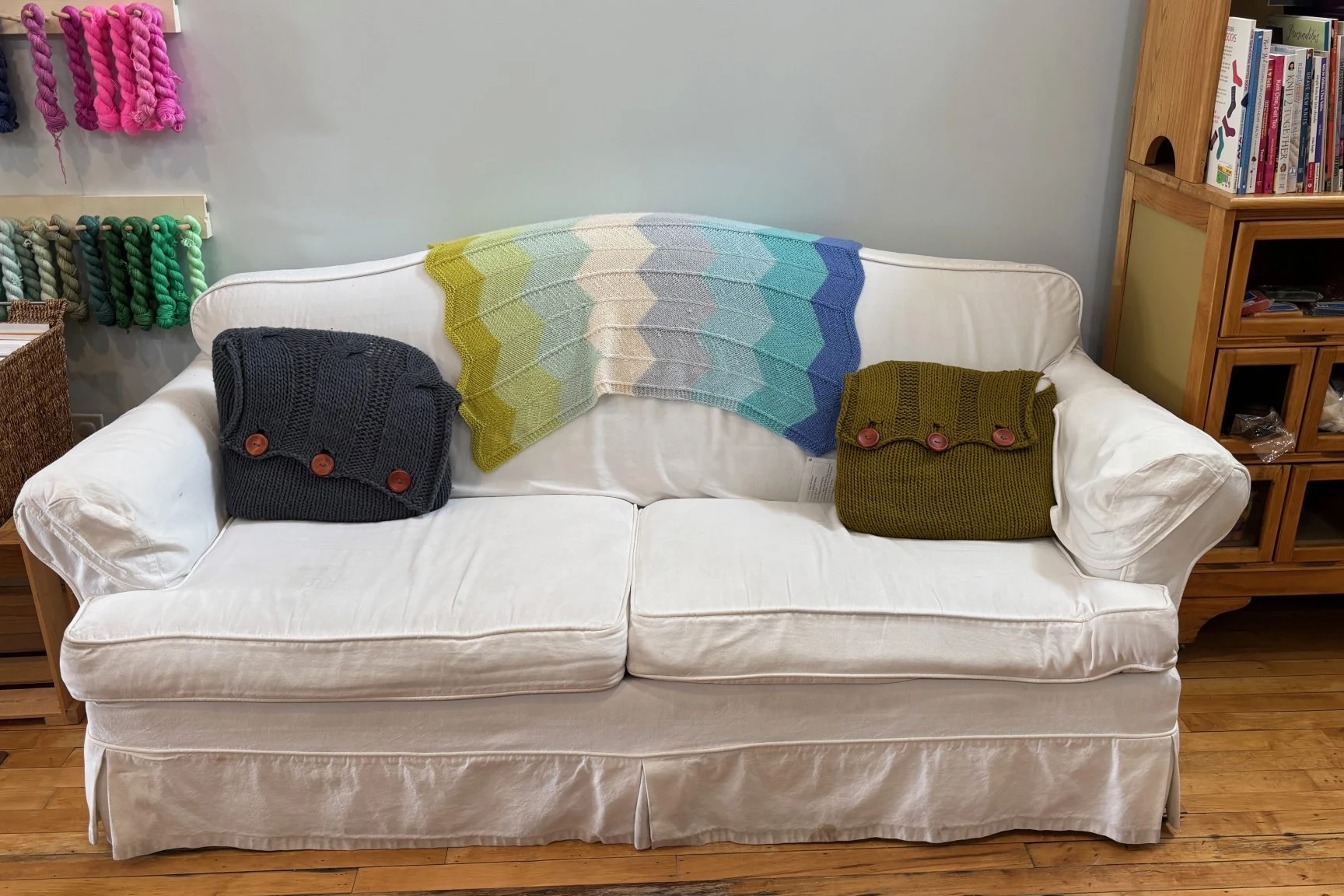
Put your throw over one sofa arm, sit in your usual place, then stand up. Where has the fabric gone? That small trial gives you something useful to work with: an edge trapped beneath you, a corner on the floor, or a fold that stayed roughly where you wanted it.
Choose the arrangement around that ordinary movement. The example below compares three placements on an imaginary sofa. Its measurements are illustrative; use your own sofa and throw to decide what feels comfortable and looks deliberate.
Give the throw one main job
Write down what you reach for it to do. Perhaps you want something over your knees while reading. Perhaps you like a patch of colour on an otherwise plain sofa. Or perhaps you want fabric across the seats when you settle down for the evening.
Those uses call for different starting positions. A folded throw on the arm is easy to see and pick up, but it does not already cover your lap. Fabric spread across the seat offers coverage immediately, though sitting down becomes part of the arrangement.
Choose one priority and one acceptable inconvenience. For example: “I want to cover my legs, and I am happy to unfold the throw each evening.” Another person might choose: “I want the seat covered, and I will straighten the fabric after use.” That sentence becomes your selection brief.
Measure the route the fabric must travel
Measure the surface you actually want to cover. For an arm placement, follow the route from the intended inner edge, over the arm, to the outer stopping point. For a seat drape, measure across the chosen cushion area and down the front if you want an overhang.
Keep these measurements separate from the sofa’s overall width. A throw travelling over a raised arm uses fabric along that route; the straight distance across the sofa does not describe the whole placement.
In this worked example, the sofa has a 180 cm seating width and a 55 cm seat depth. The throw measures 130 × 170 cm. Laid flat with its longer edge across the seats, it is 10 cm short of the seating width before allowing for any folds. It therefore cannot provide the example’s complete seat-width coverage in that orientation.
Draw a rectangle for the seat and a narrow rectangle at each side for the arms. Mark your intended coverage on this sketch. You only need enough detail to distinguish a decorative strip from a covered sitting area.
Compare three placements on the same sofa
Use the same throw for each trial so you can judge the arrangement separately from colour or pattern. The following observations are prompts for your own test, rather than promised results for every fabric.
| Placement | Mark on your sketch | Check while using it |
|---|---|---|
| Folded over one arm | A narrow band crossing the arm, with an end inside and outside | Can you reach and unfold it without disturbing nearby objects? |
| Seat-length drape | A strip running from the back across one sitting place | Does sitting pull the upper edge down or bunch fabric behind you? |
| Full-width covering | A broad rectangle across the intended seating area | Is there enough width after allowing for the shape of the sofa? |
For the example sofa, I would first try the 170 cm edge running from the back toward the seat front at one end, allowing the excess length to fall over the front or back as the sofa shape requires. That is a personal layout choice: it concentrates the fabric around one reading spot. Someone sharing the sofa might prefer a folded arm placement that leaves both seats clear.
Judge the drape through movement
Start with the folded arm arrangement. Fold the throw into a band you like, then open one fold. Compare the visible width and the bulk on top of the arm. Keep whichever version leaves your elbow comfortable and the throw accessible.
Next, try the seat-length placement. Sit, lean back, reach sideways and stand. Notice whether you need to free an edge before picking up the throw. If a cushion or your body holds part of it down, decide whether that suits its intended use.
Finally, spread it across the chosen seat area. Smooth it once, use the sofa normally, then inspect the result. A fabric that gathers into folds may still suit you if those folds feel comfortable. If you keep correcting it, record that as a mismatch for this placement.
Repeat your preferred arrangement a few times. This is a household trial, not a guarantee that a particular weave, weight or fibre will stay in place on every upholstery surface.
Keep a placement card for the arrangement you prefer
Copy this short card into your notes and fill it in while the throw is on the sofa:
- Main use: reading, decoration or covering a chosen seat area.
- Coverage required: width, depth and any overhang.
- Orientation: which throw edge runs across the sofa.
- Starting position: folded arm, seat-length drape or broad covering.
- After sitting: what moved, gathered or became awkward.
- Reset: the adjustment you are willing to make.
Once the placement works, consider the colour alongside your cushions and nearby objects. Keep the placement card: a new colour still needs to pass the same everyday sitting test.

Does Your Bag Strap Work With Your Coat? Try These Everyday Movements
A bag can look right over a coat and still interrupt every pocket reach. Use this movement test to compare strap settings, seated…

Choose a Table Runner Around a Centerpiece You Already Own
Use your existing centerpiece and everyday place settings to compare two runner widths. This measured paper-layout exercise helps you choose the visible border,…
Mix Dining Chairs by Repeating One Visible Feature
Build a dining chair arrangement around one repeated detail, then check how each chair fits your table. A worked comparison board separates personal…