How to Choose Lip Liner: Close Match or Visible Edge?
Use two paper colour sketches to decide whether you want a liner that blends with your lipstick or creates a visible border, then turn that preference into a shopping request.
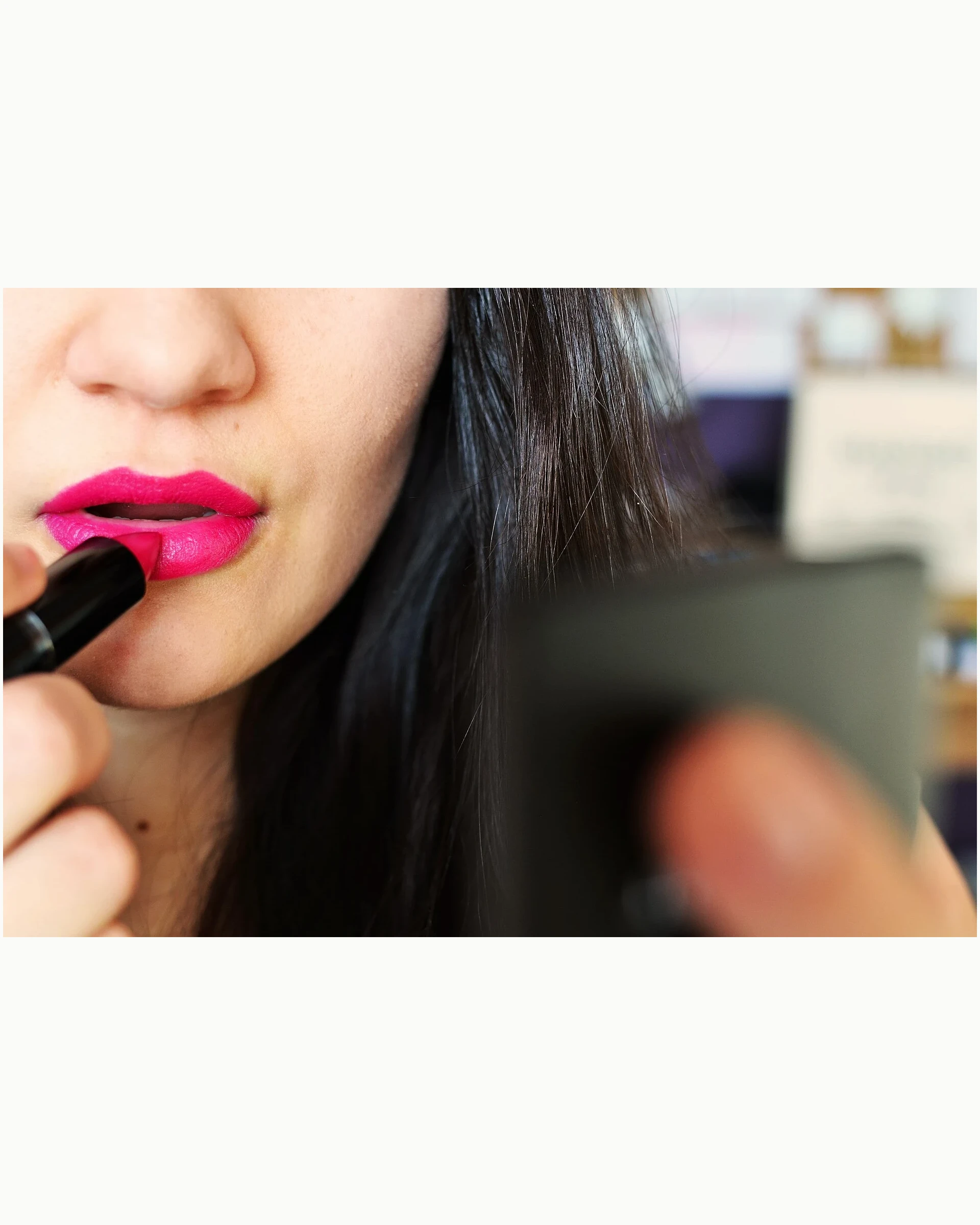

Draw two ovals with the same muted pink centre. Give one a similar pink border and the other a deeper brown border. Which would you rather use as the starting point for your lipstick-and-liner pairing?
Choose a close colour match if you want little distinction between the centre and edge; choose a different border colour if you want the outline to be visible. This paper exercise helps you describe that preference. It does not predict how particular products will look on your lips.
Compare two borders around one colour
You need plain paper and coloured pencils or pens. Start with a centre colour that roughly represents a lipstick you own or want to wear.
- Draw two matching ovals or simple lip shapes.
- Fill both centres with the same colour.
- Outline the first with a colour close to the centre.
- Outline the second with a visibly different colour. Keep the border width the same as the first.
Label them “close match” and “visible edge”. Keeping the centre and border width alike gives you one choice to concentrate on: the relationship between the two colours.
Adjust the colour before the width
If you prefer the visible edge but find your second drawing too strong, add a third version. Use the same centre again, with a border colour somewhere between your first two choices.
For example, compare a muted pink centre with a similar pink, a slightly deeper brown-pink and a deeper brown. These are possible combinations to explore, rather than recommended shades for everyone.
Choose your preferred colour relationship before experimenting with a thinner or broader line. Otherwise, you may find yourself choosing between two drawings without knowing whether it was the colour or the width you preferred.
Turn the sketch into a shopping request
Suppose you choose the brown-pink border. Your request could be: “I want a liner slightly deeper than this muted pink lipstick, with an edge that remains visible.” For the close-match version, try: “I want a liner close to this lipstick colour, without a distinct contrasting outline.”
Bring the lipstick or its exact product and shade details when looking for candidates. Use the sketch to explain the relationship you want, rather than treating its colour as an exact product match.
Once you have chosen a pairing, save both products in your makeup shade record. Add a short description such as “close pink match” or “pink centre with a deeper brown-pink edge” to record what you wanted the liner to contribute.
Christmas Coquette Nails: Turn the Trend Into a Salon Brief
Soft ribbons, sheer pinks, and crisp holiday reds define Christmas coquette nails, a look gaining momentum in early seasonal searches. Translate vague inspiration…
Store Lipsticks With Their Shade Names Facing You
Arrange matching lipstick tubes so you can read their original shade labels before lifting them. Try one drawer position first, then give each…
Do You Need a Powder Compact With a Puff Compartment?
Compare the compact and separate brush you would carry with a compact-and-puff setup. If you want to store your own puff inside, check…