Store Lipsticks With Their Shade Names Facing You
Arrange matching lipstick tubes so you can read their original shade labels before lifting them. Try one drawer position first, then give each readable tube its own place.
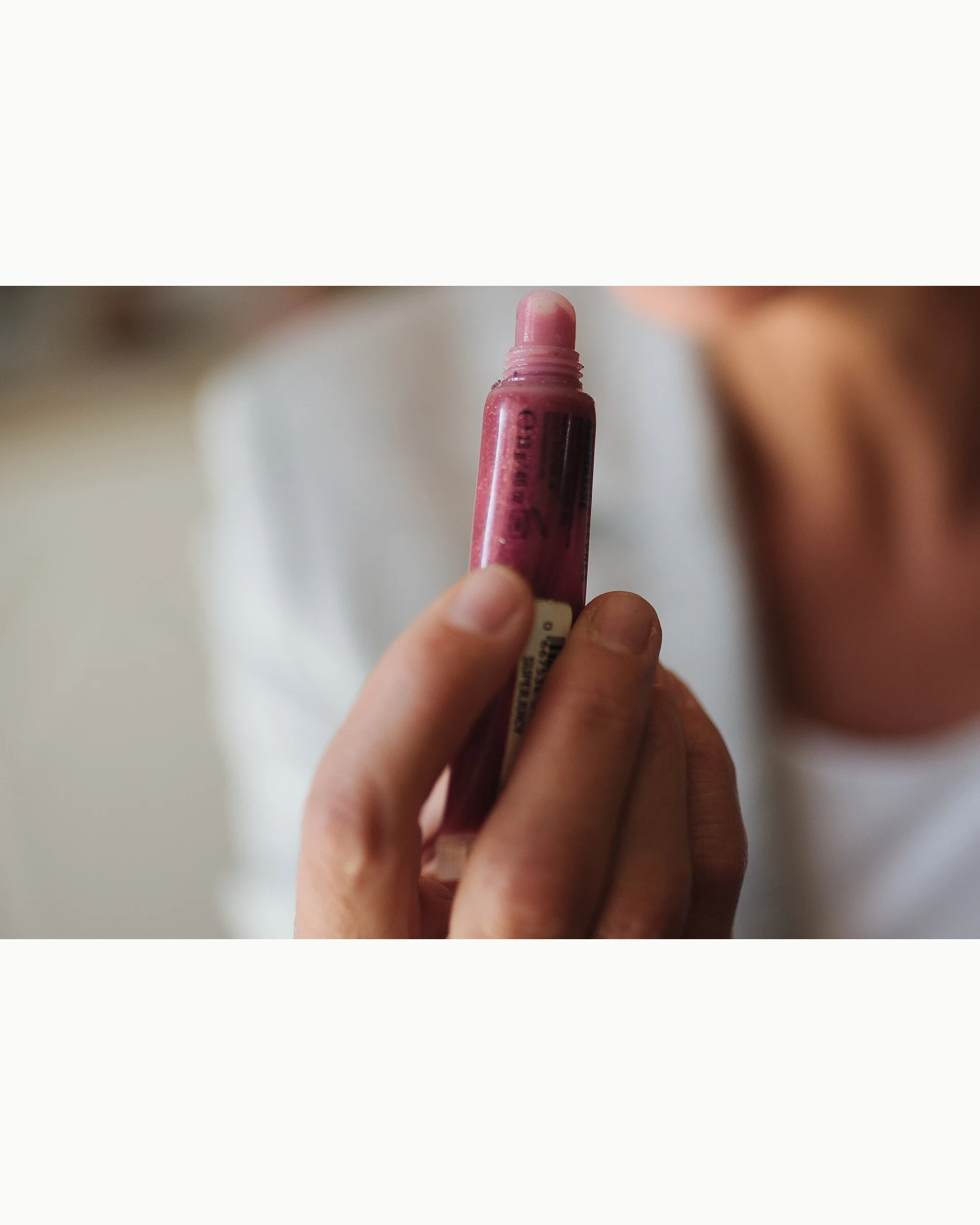

Place one closed lipstick horizontally in your drawer, with its labelled base towards you and its cap pointing towards the back. Rotate it until the shade name reads upright. If you can read it from your usual position, use that orientation for a row of matching tubes.
Start with one tube before making dividers or moving the whole collection. The drawer front may hide an end label even when it faces the right way.
Find a readable position
Open the drawer as far as you normally do and look down from where you stand. Move the lipstick backwards or sideways until you can see the name without lifting it. Leave room to grasp the body and check that the drawer closes freely.
If the label remains hidden, try a shallow tray on a surface where you can see the tube end. Horizontal storage also needs space for the full length of the closed case, so compare that footprint with your current upright arrangement before committing to a row.
This method is worth continuing only if the original lettering is readable in the new position. Rearranging tubes cannot restore a worn label or enlarge small print.
Make a separate place for each tube
For tubes that spread across the drawer, try a shallow folded-card channel as a divider. Cut a strip of plain card slightly shorter than the closed lipstick. Place the tube lengthways in the middle, then fold the two long sides upwards to form a U with a flat bottom.
Keep the sides low enough to leave the body easy to grasp. Let the labelled base project beyond the front of the card; do not add a flap across the name. Place the channel inside an existing shallow tray or divided section so it has somewhere to sit.
Try removing and replacing the lipstick a few times. Adjust the folds if the tube is awkward to lift or the channel moves with it. Make further channels only once the first is useful in your drawer.
The channel separates neighbouring tubes; it does not lock a round case in its upright lettering position. If the case keeps rotating until the name is unreadable, try a different existing compartment or tray. Do not keep adding card to an arrangement that still requires lifting every tube to identify it.
Arrange three matching cases
Imagine three identical black tubes labelled Rose, Brick and Plum. Standing cap-up, each hides its name underneath. In a readable horizontal row, the base labels become the part you choose from.
Put Brick nearest your hand if that is your everyday shade, with Rose and Plum alongside. Return each tube with the name facing you. There is no need to invent a new colour code or remember which slot belongs to which shade: the original label identifies it.
This is a small storage adjustment rather than a separate shade record. Keep the arrangement only if it lets you read the name, lift the tube comfortably and put it back without disturbing the row.
Christmas Coquette Nails: Turn the Trend Into a Salon Brief
Soft ribbons, sheer pinks, and crisp holiday reds define Christmas coquette nails, a look gaining momentum in early seasonal searches. Translate vague inspiration…
How to Choose Lip Liner: Close Match or Visible Edge?
Use two paper colour sketches to decide whether you want a liner that blends with your lipstick or creates a visible border, then…
Do You Need a Powder Compact With a Puff Compartment?
Compare the compact and separate brush you would carry with a compact-and-puff setup. If you want to store your own puff inside, check…