Choosing a Makeup Brush Handle for a Close Grip
Use a familiar brush to locate your usual grip, then compare the width, taper and joins beneath your fingers on another handle.
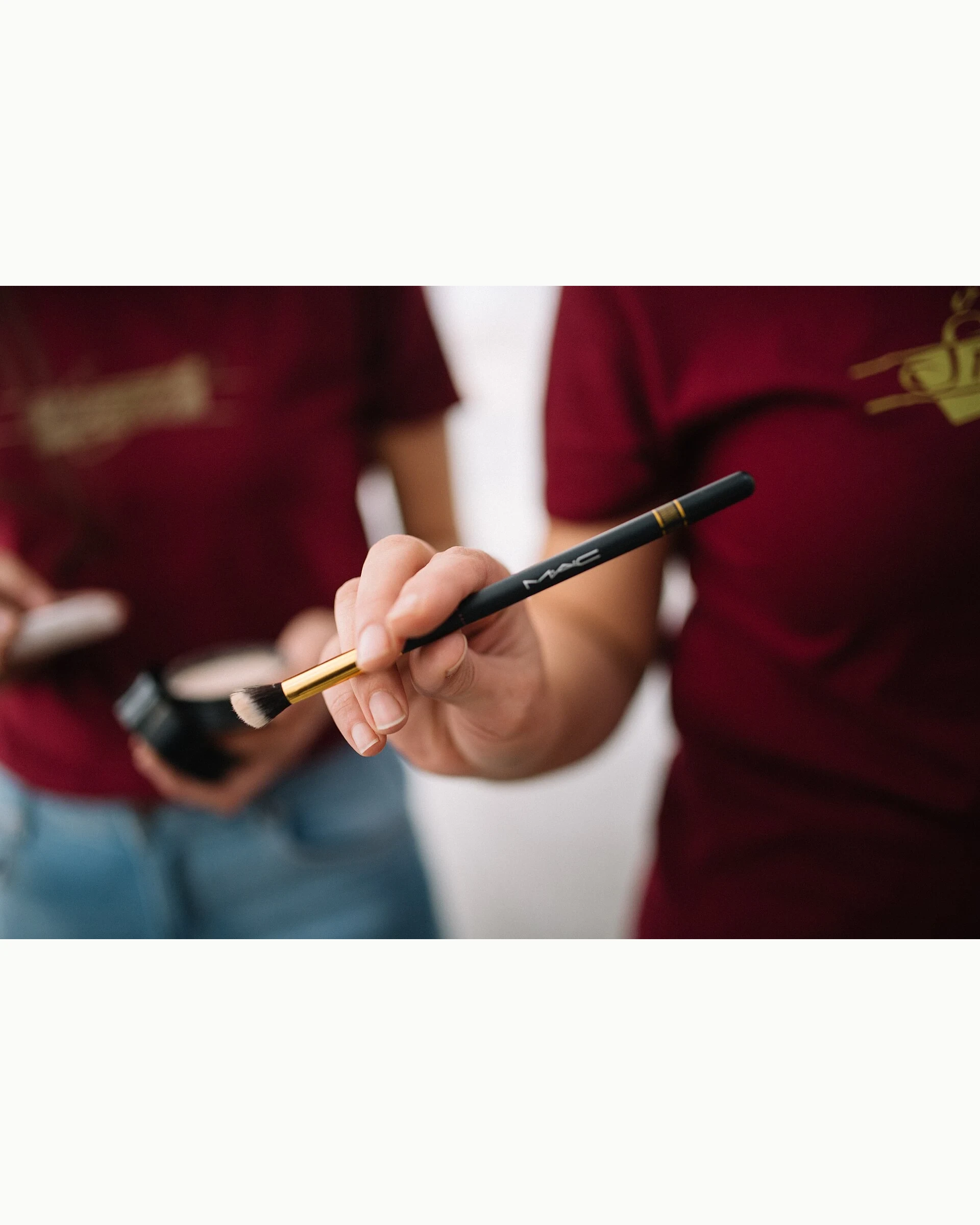

Pick up a makeup brush you enjoy holding and notice where your thumb and fingers land. If you hold it near the bristles, use that small contact area as your reference when comparing another handle: check its width, taper, surface and any raised joins.
The aim is to leave with a specific description of what you prefer, such as ‘a straight upper handle without a step beneath my thumb’.
Find your reference grip
Put the familiar brush down, then pick it up as though you were about to use it. Keep your ordinary finger position rather than arranging your hand for a photograph.
Look at the points beneath your thumb and first finger. Do they touch the handle, the metal section holding the bristles, or the join between them? Notice where any supporting fingers sit too.
If you want a shopping reference, take a close-up that includes your fingers and the upper handle. You can also write a short note: ‘Thumb crosses the join; first finger rests just below it.’ The exercise works without photographs.
Compare where your fingers land
Pick up the second brush as you would use it. Compare each handle at its own contact points; you do not need to force your fingers into identical positions.
- Width: which feels preferable between your fingers?
- Taper: does the handle narrow beneath your grip or stay fairly straight?
- Surface: do you like the feel of the finish at your usual holding pressure?
- Joins: does a ridge or step sit beneath a fingertip, and does it bother you?
If you photograph both grips, keep the views similar so you can identify the features you noticed. Use the pictures to record their location; assess the feel by holding the brushes.
Turn the comparison into a buying criterion
Imagine a short handle that narrows sharply beneath the metal section and a longer one with a straight upper section. Your fingers rest near the top of both. If you prefer the straight section, record that feature rather than simply asking for a short brush. If you prefer the narrower section, record that instead.
For example: ‘I prefer a narrow upper handle, but no raised join under my first finger.’ Keep that note beside your reference photograph when shopping. An online image may show the shape; it cannot tell you how the finish will feel in your hand.
Then assess the brush head for the makeup task. Our guide to comparing makeup brush shapes by the marks they make covers that separate choice.
Christmas Coquette Nails: Turn the Trend Into a Salon Brief
Soft ribbons, sheer pinks, and crisp holiday reds define Christmas coquette nails, a look gaining momentum in early seasonal searches. Translate vague inspiration…
How to Choose Lip Liner: Close Match or Visible Edge?
Use two paper colour sketches to decide whether you want a liner that blends with your lipstick or creates a visible border, then…
Store Lipsticks With Their Shade Names Facing You
Arrange matching lipstick tubes so you can read their original shade labels before lifting them. Try one drawer position first, then give each…