How to Use a Map to Choose a River-Facing Train Window
Follow an invented railway through two bends to work out which side faces the river. Then reverse the journey and calculate the return choice.
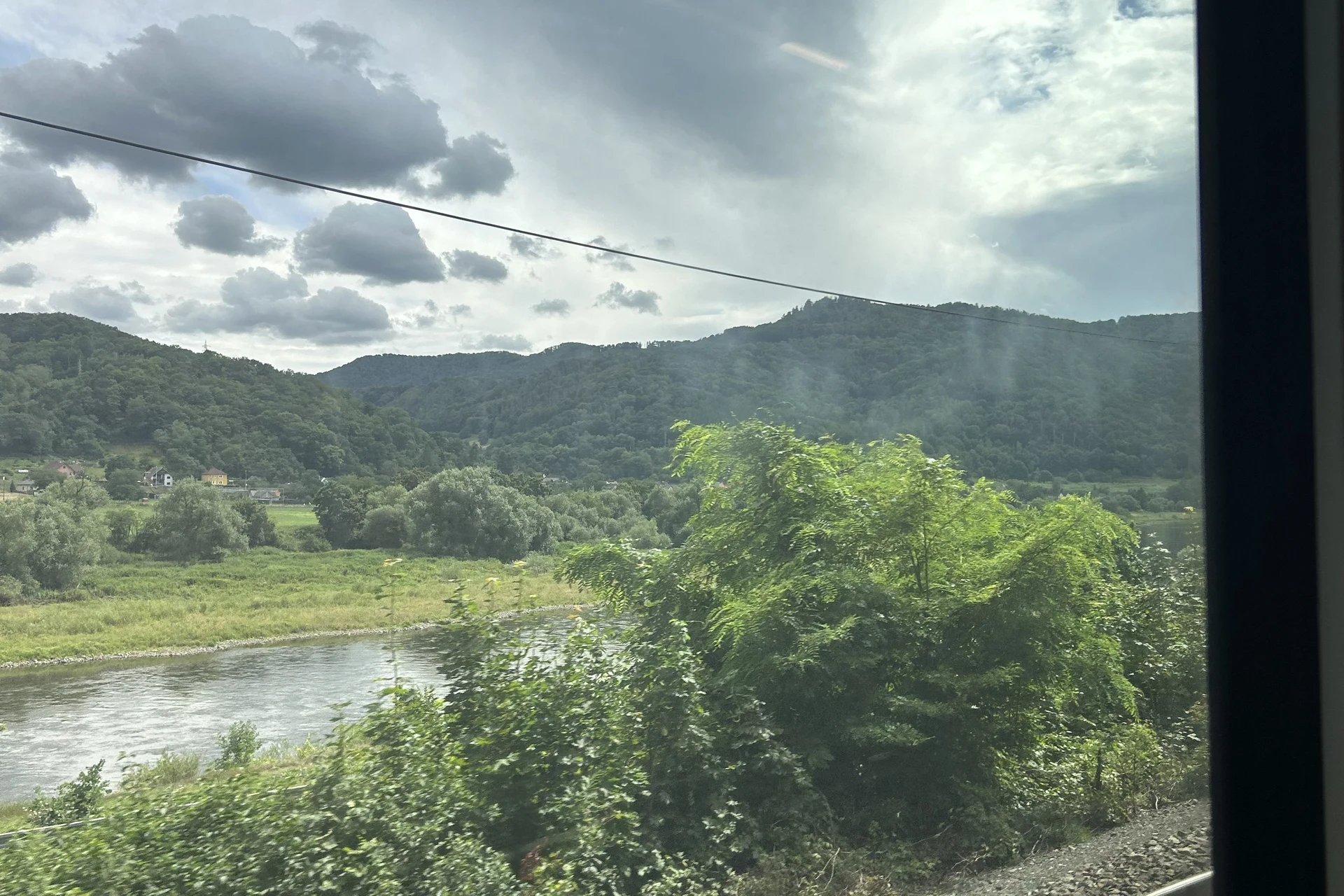
For the invented journey below, choose the right side going from Alder to Dene and the left side coming back. You can work out those choices by tracing the railway and checking where the river lies beside each stretch.
Use the same method to identify a river-facing side on your own route. It establishes relative position; it does not establish whether the view from a particular window is clear.
Read left and right in the direction of travel
Imagine looking forwards along the train’s direction of travel. That defines the left and right sides used here. If you sit facing backwards, the train’s travel-relative right will be on your left.
On paper, put north at the top. Draw Alder below Birch, Cove to the right of Birch, and Dene above Cove. Join them in that order. Your railway runs north, then east, then north, making two bends.
Add a river east of the Alder–Birch stretch, south of Birch–Cove and east of Cove–Dene. Curve it around the outside of the bends without crossing the railway. These are invented places and a deliberately simple layout.
| Railway stretch | Direction of travel | River position | River-facing side |
|---|---|---|---|
| Alder to Birch | North | East of railway | Right |
| Birch to Cove | East | South of railway | Right |
| Cove to Dene | North | East of railway | Right |
Although the river changes compass position, it remains on the right of the outward journey. Read each stretch using its own direction of travel.
Turn the journey around
From Dene to Cove you travel south: east is now on your left. From Cove to Birch you travel west: south is on your left. From Birch to Alder you travel south again, leaving the river to your left.
The return choice is therefore left, assuming you follow the same route. The river has stayed in place; the direction defining left and right has reversed.
Make a note for your own journey
Find the railway itself on a map, rather than drawing a straight line between the departure and arrival stations. Pick the riverside section you care about and trace the railway towards your destination. At each bend, check the river’s position again. If the railway crosses the river, calculate the side separately before and after the crossing.
Write down the section, direction and side together: for example, “Birch to Cove, towards Dene: right”. That is more useful than a bare “right”, which loses its meaning when you reverse the journey.
If different sections favour different sides, choose the section you most want to see. Buildings, vegetation and other obstructions remain a separate question: locating the river on a map alone cannot settle visibility.

Where to Put Lunch in a Two-Neighbourhood City Break
Compare two bookshop-and-gallery schedules that give an extra 45 minutes to different neighbourhoods, then see how each handles a longer lunch.
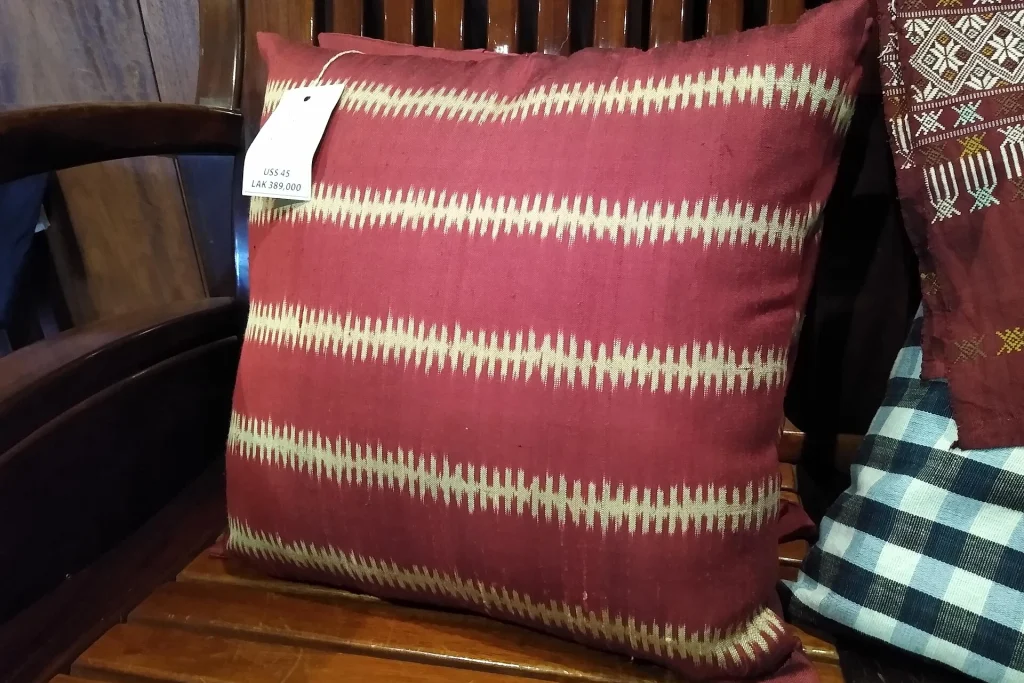
Buying a Textile Souvenir: Record the Material and Care Details Before You Leave
A beautiful textile needs more than a place in your suitcase. Capture its stated material, measurements, care instructions and maker details while you…

How to Find a Book That Feels Local in a Bookshop
A nearby publisher, a local setting and a staff recommendation offer different connections to a place. Compare two invented passages to choose the…