Keep a Motif Source Notebook Instead of Saving Unlabelled Inspiration
Keep a decorative motif connected to its object, maker attribution and collection record. This notebook template separates source details, visible features and personal styling ideas without guessing at cultural meaning.
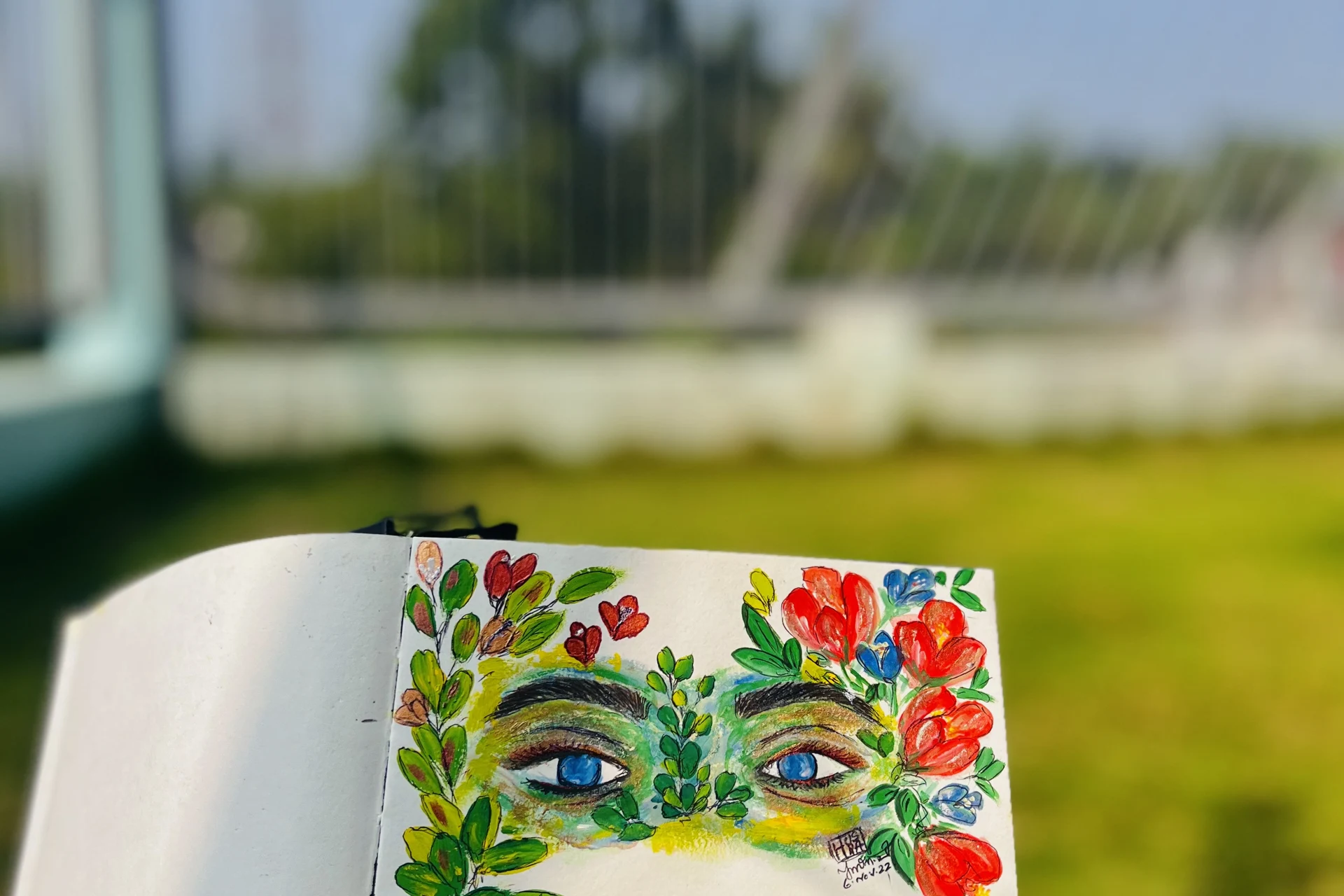
A page headed “red flower idea” gives you a colour and a subject. A page headed with an object title, institution and collection link gives you a way back to the thing that caught your eye. Put those details beside the sketch while you still have them.
A motif source notebook can hold two useful records together: where you encountered a decorative element and what you want to do with it. Keep those records visibly separate so a personal styling idea does not become a claim about the original object’s meaning.
Give every entry a source block
Start with the institution, object title and collection link. Add an accession or museum number when one is given. If you are working from a postcard or book rather than a collection record, identify that item and the page or caption you used.
Copy the maker attribution and date wording carefully. “Designed by,” “made by” and “published by” describe different roles. A date introduced by “about” should retain that qualification. Do not make a record look tidier by making its attribution more certain.
Distinguish an object link from a collection homepage. Both can be useful, but only one may lead directly to the item. Label a general search route as such, and add the object link later if you find it.
The V&A search provides fields for title or object type, artist or maker, materials or techniques, place of origin, accession number and dates. These give you several ways to return to an entry when a remembered colour or shape proves too vague.
Use a template that separates three kinds of notes
Give the source details, your observations and your personal response their own spaces. A notebook page, document or spreadsheet can all work; choose the format you will actually update. The essential feature is that you can tell whose wording each note contains.
| Field | What to enter |
|---|---|
| Institution and object title | The holding institution and the title as recorded |
| Maker attribution | Exact wording, including roles and qualifications |
| Date and place | The wording given, retaining “about” or date ranges |
| Identifier and collection link | Any object number and the most specific available link |
| Source description | A short quotation or clearly labelled paraphrase |
| My observation | Visible shapes, arrangement, spacing or colours |
| My response | A personal styling, drawing or organisation idea |
| Open question and access date | What you still want to check and when you made the note |
Leave “not recorded” where necessary. That is more useful than a guess, especially if you later combine several pages into a folder. Give your sketch the same entry number as the source block so the two remain connected if separated.
Work through one attributed object
The V&A lists a “‘Youthlines’ bodystocking with applique daisy motif,” designed by Mary Quant, dated 1963–66, UK. Those details provide a compact source block: institution, title wording, designer attribution, date range and place wording.
Begin there without adding visual details you have not examined. The title identifies a daisy motif; it does not give you a count of flowers, their colours or their positions. Put those questions in the observation section until you have a suitable view.
An initial entry could read: “Source description: daisy motif named in object title. My observation: to be added after viewing an image. My response: I would like to try a small floral detail beside a plain cuff.” The last sentence is a personal proposal, not a description of Quant’s garment.
If you later sketch the motif, note whether you drew the whole visible shape or selected a detail. Keep the original source block intact. A cropped study should still lead back to the complete object and its attribution.
Describe appearance without assigning meaning
“Five rounded forms around a centre” describes a shape. “A symbol of renewal” assigns meaning. Keep the second kind of statement out of your observation field unless you have specific information supporting it, and identify where that interpretation came from.
The same care applies to broad labels. Do not assign a motif to a culture, religion or tradition because it resembles something you remember. Record the resemblance as a question, with the second object identified if possible.
You can still make a personal response without solving every question. “I like the spacing between the repeated shapes” is complete on its own. It explains your interest without claiming to explain the maker’s intention or the motif’s cultural significance.
Turn the notebook into a usable styling reference
Give each entry a few practical tags based on what you can identify: border, scattered repeat, large scale, small scale, floral or geometric. Treat these as your filing choices. Preserve the object’s recorded title even when your tags use different words.
For an original styling exercise, choose one feature to carry forward. You might use the spacing of a border to plan gaps between accessories, or select a small floral detail as the focus of a plain outfit. Write down what you changed so the new idea stays distinct from the reference.
If you want to turn a visual preference into instructions for a service, the approach in building a salon brief from a style idea offers a related next step.
Before closing an entry, test its usefulness: can you identify the object, locate it again and distinguish the recorded information from your own response? Add the missing identifier or label now, while the reference is still open.
Sources and editorial notes

Build an Occasionwear Reference Folder From Your Own Photos
Turn a handful of event photos into a useful dressing reference. Record venue, invitation wording and combinations you actually wore, then add the…
Build a Visual Glossary From Five Details in One Museum Object
Use five details from one object to build a visual glossary you can revisit. Pair small drawings with plain descriptions, verified terms and…
What a Fashion Plate Can—and Cannot—Tell You About Clothing
A drawn sleeve can reveal a silhouette without explaining its construction. Use a simple evidence table to separate visible details, printed descriptions and…