What a Fashion Plate Can—and Cannot—Tell You About Clothing
A drawn sleeve can reveal a silhouette without explaining its construction. Use a simple evidence table to separate visible details, printed descriptions and unanswered questions when looking at historical fashion illustrations.
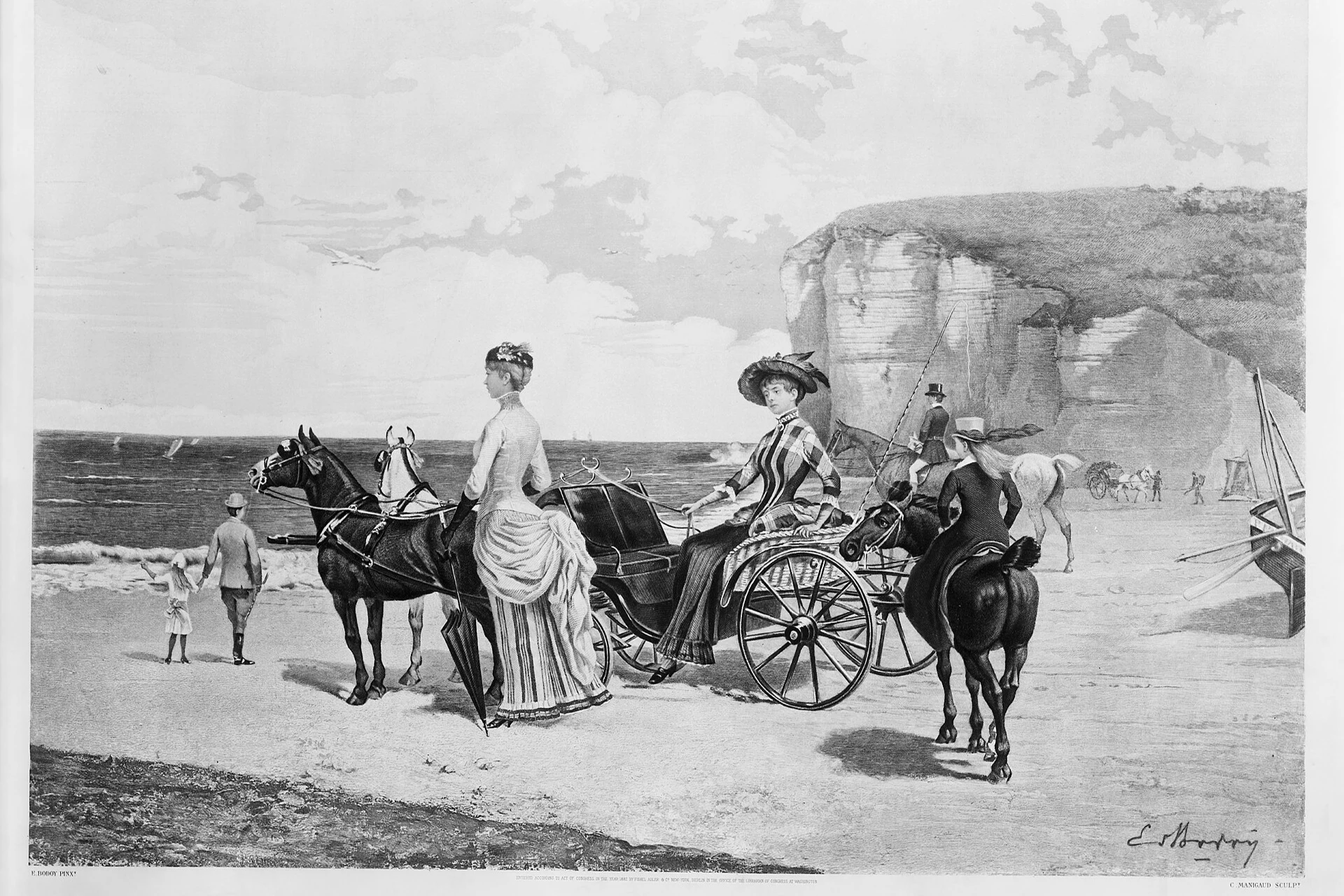

Draw three columns on a page: what I can see, what the text says, what I still need to know. Put “wide skirt outline” in the first column. A fabric named in the caption belongs in the second. Whether someone could sit comfortably in that skirt belongs in the third.
That small division gives you a useful way into a historical fashion plate. You can study the image closely while keeping its different kinds of information separate. A drawn outfit offers plenty to examine, but the picture alone cannot settle every question about the clothing it represents.
Start with the shape the illustrator gives you
Choose one figure and trace its outer edge with your eyes. Where does the shoulder end? Where does the waist appear? Does the skirt spread sideways, project behind the figure or fall close to the legs? Describe those relationships before attaching a period label.
Keep your first notes literal: “The sleeve widens below the elbow” or “The hem is drawn close to the ground.” These statements identify marks on the page. “The sleeve allowed easy movement” adds a claim about wearing the garment that the outline does not establish.
Look at the pose separately. An angled torso, extended arm or turned foot changes which parts of the outfit you can inspect. If one sleeve disappears behind the body, mark it as hidden. Do not complete it from memory and then treat your reconstruction as something the illustration shows.
Read the printed words as a separate layer
Copy a caption before paraphrasing it. Preserve qualifications, unfamiliar terms and any distinction between the image title and the description of the clothes. If a word is illegible, leave a gap in your transcription instead of supplying a plausible replacement.
A printed description can name something you cannot identify visually. Suppose an imaginary caption calls a dress “blue silk.” Your note can say that the caption names silk; it should not say that you have confirmed the fibre by looking at the illustration.
Also distinguish words printed on the historical sheet from information in a modern catalogue. Record which is which. A date attached to a publication, an image and a depicted outfit may answer different questions; do not silently move a date from one category to another.
When searching a collection, keep the search terms specific. The V&A collection search offers fields including title or object type, artist or maker, materials or techniques, and dates. Those fields provide useful routes for locating an identifiable record to accompany your notes.
Build an evidence table before making a story
The following is an illustrative exercise, not a description of a particular historical object. Imagine a plate showing a standing figure with a broad skirt, small hat and partly concealed hands, accompanied by the imaginary “blue silk” caption.
| Feature | Depicted detail | Printed description | Unanswered question |
|---|---|---|---|
| Skirt | Broad outline around the lower body | No construction information in this example | What creates or supports that outline? |
| Fabric | Blue areas and drawn folds | “Blue silk” | What weight and finish did the intended fabric have? |
| Hat | Small shape tilted on the head | No hat description in this example | How would it be secured? |
| Hands | Partly concealed | No relevant wording | What details are hidden by the pose? |
Use “not stated” when a caption offers no answer. An empty cell can otherwise become an invitation to guess. If you later find a related garment or another view, add a dated note identifying that additional object rather than rewriting your original observation.
Keep the pictured outfit separate from everyday wear
A figure wearing an outfit in an illustration does not, by itself, establish how many people wore something similar, how often they wore it or what it cost. Those are separate questions requiring information beyond the drawn figure.
Be especially careful with statements about comfort and movement. Drawn folds may suggest where fabric bends, but they do not let you test the weight of the garment or the resistance of a seam. A walking pose is still a fixed depiction.
The same restraint applies to manufacture. A line might represent a seam, trim, fold or shadow. Write “a line runs down the bodice” until the caption or other identifiable evidence supports a more precise description. Precision sometimes means choosing a less ambitious noun.
Turn one observation into a useful next step
Finish your visit or reading session with one question you could actually investigate: “Is there another view of this sleeve?” is more workable than “What was fashion like then?” Save the full image, its identifying details and your question together.
If the illustration inspires an outfit of your own, label that step as a personal interpretation. You might choose a broad skirt and a compact bag because you like their proportions. You need not present the result as a historical reconstruction. For a contemporary exercise in changing an outfit through accessories, try this three-outfit capsule approach.
A useful final note is short and specific: “I can describe the skirt outline and transcribe the fabric wording. I cannot yet explain the support underneath.” Keep that sentence beside the image so your next look begins with a clear question.
Sources and editorial notes
Build an Occasionwear Reference Folder From Your Own Photos
Turn a handful of event photos into a useful dressing reference. Record venue, invitation wording and combinations you actually wore, then add the…
Build a Visual Glossary From Five Details in One Museum Object
Use five details from one object to build a visual glossary you can revisit. Pair small drawings with plain descriptions, verified terms and…
Keep a Motif Source Notebook Instead of Saving Unlabelled Inspiration
Keep a decorative motif connected to its object, maker attribution and collection record. This notebook template separates source details, visible features and personal…