Compare Two Blazers Without Changing the Rest of Your Outfit
Keep your shirt, trousers and shoes fixed while you compare two blazers. This controlled try-on separates what you notice, what you can comfortably do and what you would actually choose to wear.
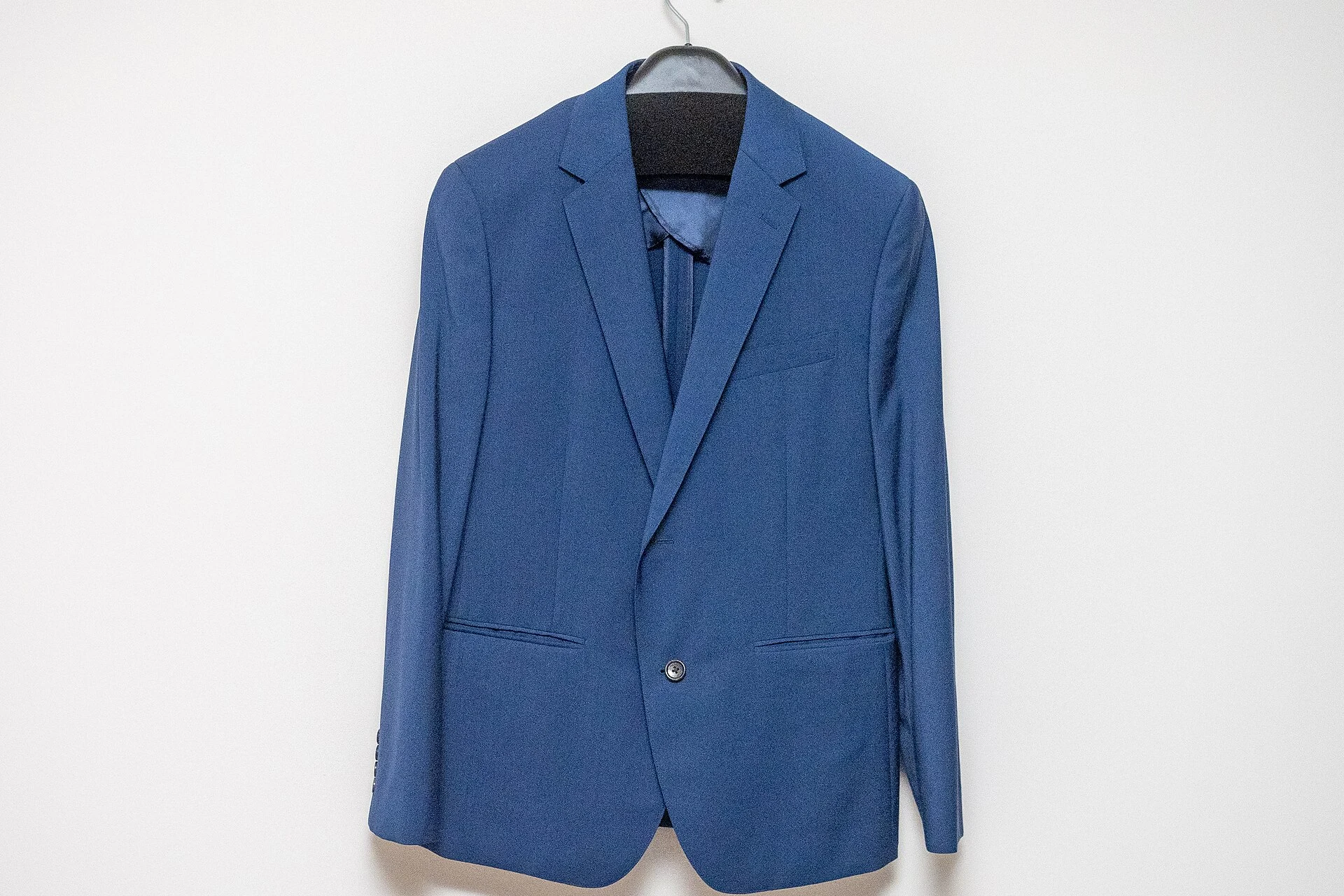

Lay out one shirt, one pair of trousers and one pair of shoes. Add blazer A, take a photograph, then swap only the blazer. Leave the sleeves of your shirt, the waistband and the accessories alone. You now have two outfits with one deliberate difference.
This is a useful way to choose between jackets when styling keeps distracting you. A different shoe or tucked shirt may create an outfit you like, but it also changes the question. First decide which blazer you prefer with this base. Experiment with separate styling afterwards.
Choose a base outfit that earns its place
Use clothes you genuinely intend to wear under and alongside the blazer. If the jacket is for ordinary workdays, start with that shirt and those trousers. If you want it for dinners, use your likely dinner outfit rather than a convenient fitting-room substitute.
Keep the contents of your pockets consistent too. Do not assess one blazer empty and the other with your phone tucked into it. Either compare both empty or repeat the comparison carrying the same items where you intend to put them.
Give the jackets neutral labels: A and B. Write down their identifying details elsewhere if needed. The labels make it easier to record observations such as “B needs sleeve adjustment” without turning every note into a defence of a favourite colour or label.
When you need help assembling the starting clothes, the one-base holiday outfit guide offers a related planning approach. For this test, choose just one base and hold it steady.
Compare the outline before rearranging anything
Stand normally with your arms relaxed. Look at each blazer from the front, side and back, using the same mirror or camera position. Do not push up one jacket’s sleeves or pull its front into a more pleasing position unless you repeat that exact choice with the other.
Describe what you see before judging it. “A ends above the trouser pockets; B covers them” is more useful than “A has better proportions.” You may still prefer A, but now you know which visible difference contributes to that preference.
Choose three visual checkpoints rather than inspecting everything at once:
- Front opening: how much of the shirt and waistband do you want to see?
- Lower edge: where does each jacket end against these trousers?
- Sleeve and cuff: how much shirt cuff, if any, do you want visible?
These are preference questions, not a pass-or-fail tailoring code. A longer jacket can be your intended look. A shorter sleeve can also be deliberate. Record the effect instead of labelling every difference a fault.
Repeat the same ordinary movements
For each blazer, sit on the same chair, reach forward as if using a keyboard and put on the bag you expect to carry. Walk a short distance and return to your standing position. Note any place where you want more room or keep adjusting the garment.
If you plan to fasten the blazer, compare it fastened as well as open. Use its intended fastening arrangement rather than forcing every visible button closed. If it is not designed to close, mark the closed comparison as not applicable.
Keep sensation and appearance in separate notes. “I like the front when closed” and “I want more room when reaching” can both be true. Neither needs to erase the other.
This short try-on cannot settle how you will feel after a whole day. It can identify an immediate objection you should not talk yourself out of simply because the photograph looks good.
Use a decision sheet instead of a total score
A single number can hide the one issue that matters most. Use a short comparison sheet with a final column for importance. The following entries show an illustrative decision, not results you should expect from particular blazer shapes.
| Checkpoint | Blazer A | Blazer B | Importance for this outfit |
|---|---|---|---|
| Standing outline | I prefer the shorter lower edge. | More coverage than I want. | Preference |
| Seated and reaching | I keep adjusting the upper sleeves. | No adjustment wanted in this test. | Must work |
| Open front | Shows the amount of shirt I want. | Also works for me. | Either is acceptable |
| With everyday bag | Needs another check. | I prefer this combination. | Must work |
| Decision | Do not choose on the photo alone. | Repeat once before deciding. | Next action |
In this example, A wins one visual preference but does not automatically win the purchase. The wearer has made easy movement a requirement. Your requirements may differ, but name them before explaining away a result.
Keep the conclusion as narrow as the test
Finish this sentence: “With this shirt, these trousers and these shoes, I prefer ___ because ___.” That is a defensible conclusion. “This is the better blazer for everything” is not what you tested.
If B works only after changing the trousers, save that combination as a separate outfit. It may be excellent; it simply belongs in a second round. Photograph and label it separately so you do not confuse a successful restyling with the original comparison.
Allow “neither” as an outcome, especially when both jackets fail something you marked essential. If you are comparing a possible purchase, use the fitting-room checklist for the broader decision. Keep the comparison sheet focused on what these two blazers actually did with your clothes.
What to Wear Under a Sheer Top: Compare Coverage, Edges and Necklines
Choose an underlayer by deciding what you want visible, then checking straps, neckline and hem. A simple visibility map and three illustrative outfits…
One Square Scarf, Three Folds: Choose by the Fabric You Want to Show
A narrow band, broad triangle and loose rectangle reveal different parts of the same square scarf. Try this tabletop comparison to choose the…
How to Dry a Wool Sweater Flat When You Have Limited Space
Plan a supported drying footprint before washing your wool sweater. This small-space guide combines label-led care, gentle reshaping and a measured layout so…