How to Check Earrings Against a Raised Coat Collar
Compare two pairs with your collar in its usual position. Check the movement as well as the photographs to distinguish a visible overlap from brushing or catching.
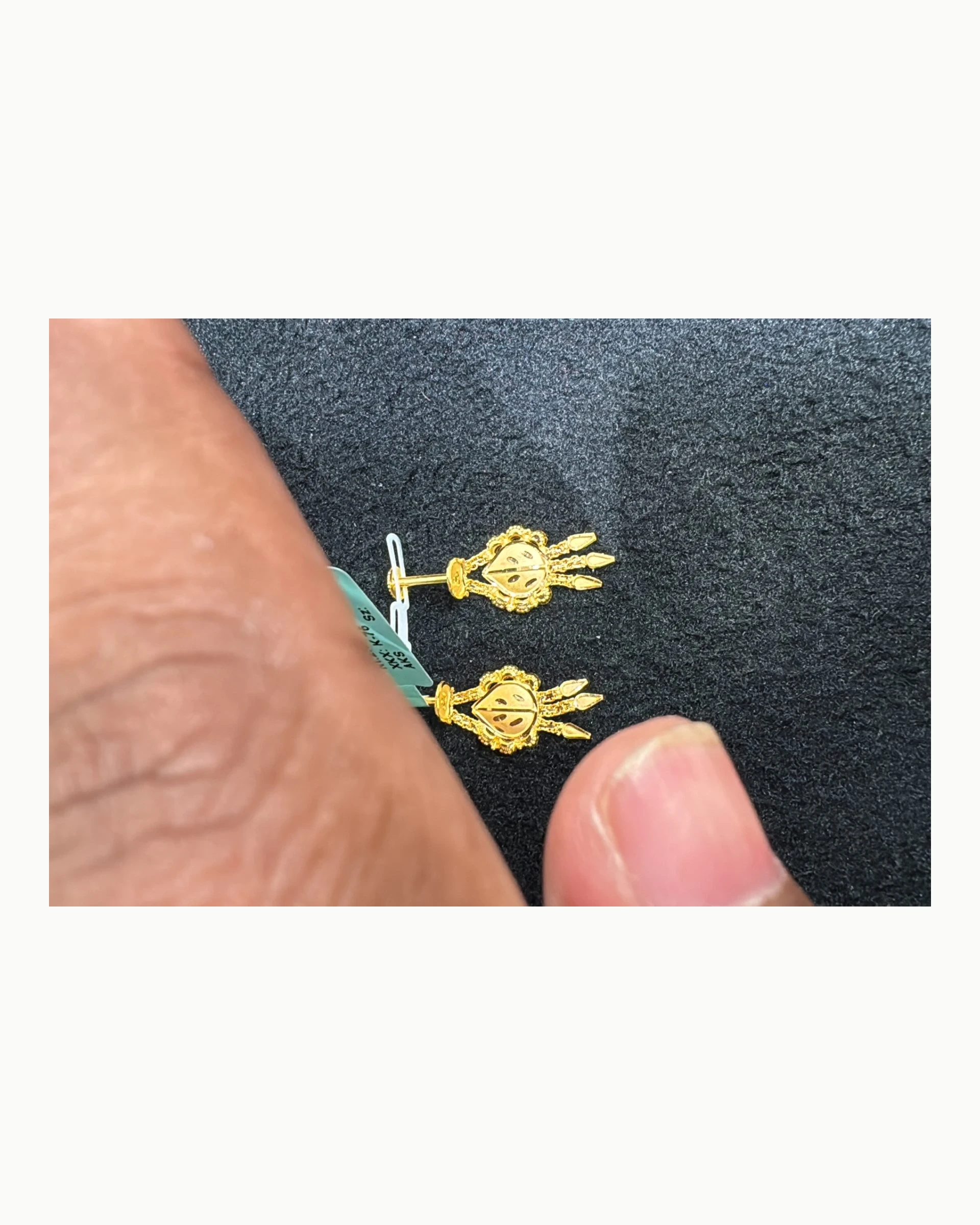
Put on your coat with the collar raised as you normally wear it. With your earrings hanging freely, turn your head gently towards each shoulder. Check whether either earring brushes the collar, rests against its edge or catches. Stop if you feel a tug; do not repeat a movement that catches the earring.
Then try a shorter pair without changing the collar. This gives you a specific choice between two pairs for the outfit, rather than a rule about which earring lengths suit high collars.
Set up the coat once
Wear the layers you intend to put underneath and fasten the coat to your usual height. Leave the collar in that position for both pairs. If you would only wear the longer earrings with the collar folded down, treat that as a separate outfit option.
Start facing forward, then turn comfortably towards each shoulder. Check both ears rather than assuming the result on one side settles the other. Let the earrings fall naturally instead of arranging them away from the fabric.
Use photographs to compare positions
If you want a record, ask someone to photograph the ear and collar area while you face forward, then while your head is turned. Repeat on the other side. Keep the camera at a similar height and angle for the second pair; the guide to taking consistent outfit photos offers a related exercise.
Watch the movement itself too. Use the pictures to compare where the earrings sit, rather than treating a front-facing photograph as the whole check.
Separate overlap, brushing and catching
An earring that appears to overlap the collar in a photograph needs a closer look: record whether you actually saw or felt contact. A light brush and a catch are different outcomes, so describe what happened precisely.
- Clear: no contact noticed during the movement you tried.
- Brushing: contact noticed, with the earring continuing to move freely.
- Catching: the earring stops against the fabric or you feel a tug. Stop and gently free it.
Make the choice for this outfit
Suppose a drop earring clears the collar when you face forward but rests on its upper edge when you turn. The shorter pair stays clear through the same movement. If you want the collar raised and no contact, choose the shorter pair for this coat.
If both pairs clear it, choose the appearance you prefer. If both catch, set them aside for this outfit and try a pair closer to the ear. If there is only a light brush, decide whether that contact bothers you. The useful result is a pair you can wear with the collar in your chosen position.

Make a Personal Length Reference Card for Tops, Jackets and Skirts
Measure a favourite top, jacket and skirt using clearly recorded starting points. Turn the results into a pocket reference card with sketches and…

Raw and Selvedge Denim: What Each Label Actually Means
Raw describes unwashed denim; selvedge describes construction. Read three fictional jeans descriptions to separate those features from questions about fit, pre-shrinking and care.
Hang or Fold? Choose Storage by Garment Structure
Use four everyday garments to make a practical storage plan. Check weight, stretch, shoulder shape and your tolerance for creases, then give each…