Guide ·
Winter Boots Buying Guide 2026: Fit, Warmth, and Style
Winter boots buying guide 2026: how to choose waterproof, warm boots that fit, which 2026 styles are worth your money, and care tips that make them last.
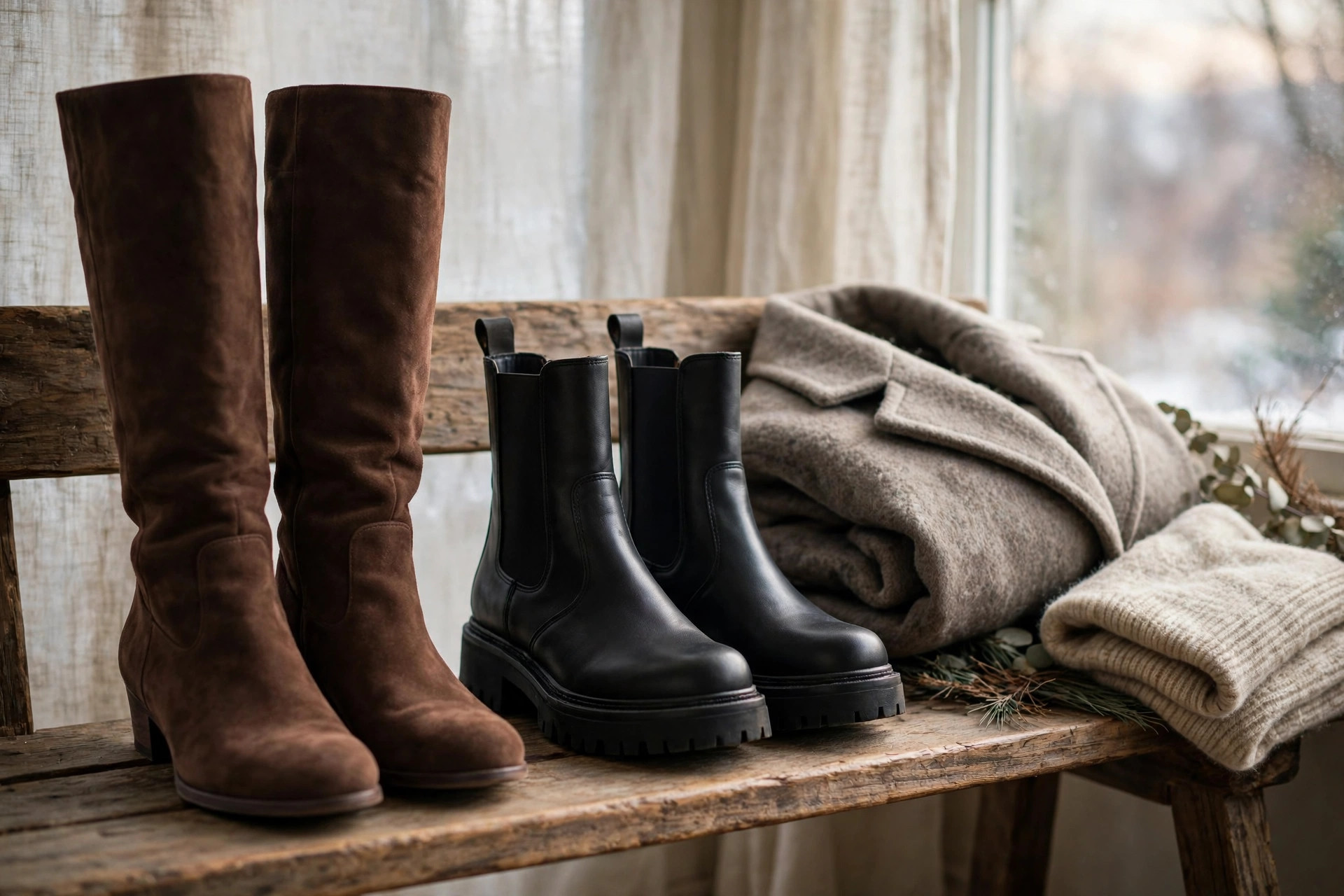
A proper winter boot does three things: keeps water out, keeps warmth in, and stays comfortable on long days. Everything else is styling. Before you compare prices or silhouettes, check the spec that matters: a waterproof membrane or waterproofed leather, some form of insulation or thermal lining, and a rubber lug sole for grip. Winter shoes are a market where roughly 61 percent of annual sales land in the fourth quarter (winter snow boots market report), which tells you when the best stock and the best discounts appear. Buy early in the season if you need a common size; buy late if you want the markdown.
What separates a real winter boot from a winter-looking boot
The distinction is construction, and it is worth learning because the marketing photos will not teach it to you. A boot that says "water-resistant" can usually handle a drizzle. A boot built for winter should be waterproof, with sealed seams or a waterproof membrane, because slush is the test and slush finds every gap. Genuine waterproof construction matters more than any finish you can see from the outside, and it is worth paying for if your winter involves rain, melting snow, or daily commutes on salted sidewalks.
Insulation is the second check. Shearling-lined and insulated boots dominate the cozy end of the 2026 season (Hemline Weekly boot trends 2026), but lining alone does not tell you how warm the boot is. Read the temperature rating if the brand publishes one, and treat boots without any rating as city boots for mild winters. Insulated boots with thermal lining represent close to half of product demand share (winter snow boots market report), so the market has settled on warmth as standard rather than a premium extra.
The third check is the sole. A chunky rubber lug sole is the anti-fashion footwear detail that keeps refusing to fade, and there is a practical reason: deep lugs grip slush and packed snow where a flat leather sole slides (Luxury London best winter boots 2026). Rubber outsoles appear in more than 70 percent of manufactured winter boots (winter snow boots market report), which makes a smooth sole the exception rather than the rule. If you walk on ice regularly, look for outsoles with multidirectional lugs rather than decorative tread.
The 2026 styles that are worth your money
Trends matter here for one reason: the styles everyone makes are the styles you can find in more sizes, more calf widths, and at better prices. Slouchy suede knee-highs are the standout of the season, a relaxed gathered shaft that works over jeans or under a skirt, with chocolate brown, tan, and olive leading the color chart (Hemline Weekly boot trends 2026). They are beautiful with warm neutrals, but note the trade-off: untreated suede and slush are enemies, so this style is a dry-weather pick unless you commit to waterproofing spray and regular reapplication.
Classic knee-high leather boots remain the workhorse. The knee-high silhouette is one of the most searched and most versatile long boot styles for winter, moving from day to night without a second pair (Edward Meller boot trends 2026). Choose smooth leather or treated suede in black, cognac, or espresso, and check the shaft circumference against your own calf measurement before ordering online. A shaft that gaps at the back will look sloppy and let in drafts; a shaft that strains at the widest part of your calf will not zip up over tights.
Chunky lug-sole Chelsea boots are the practicalist choice of the season. The Chelsea cut, with its elastic gussets and pull tab, has survived since the Victorian era, and the 2026 version adds the lug sole for traction while keeping the silhouette clean enough for office wear (Luxury London best winter boots 2026). They pair with straight-leg jeans and heavy knits, and they are the easiest tall-ish boot to get on and off on a rushed morning.
Shearling-lined boots and biker-style buckle boots round out the season. Shearling is the pick for genuine cold, the Saturday morning boot for tucking joggers into (Luxury London best winter boots 2026). Biker and western details, buckles, straps, heavy stitching, are the style end of 2026, best treated as a second pair rather than the one that must survive February (MomsKoop 2026 boot trends).
Fit checks that decide whether you keep them
Boot regret almost always comes down to fit, and fit is more unforgiving in a winter boot than in a pump because your feet expand in warm socks and your calves meet the shaft. Shop in the afternoon when your feet are at their largest, and wear the socks you plan to wear. Thin socks for office boots, thick wool socks for weather boots. Trying on with the wrong socks is how you end up with a pair that pinches by evening.
Start with the toes. You want a thumb's width of space between your longest toe and the front of the boot, because toes that touch the front will go numb on cold walks. Walk in them, not just stand. Check that your heel lifts only slightly; a heel that slips a full centimeter will blister, and no break-in period fixes that reliably in a stiff winter boot.
Then check the calf. Calf width and shaft height are the first things to verify on tall boots, and review notes about whether a style runs small or large are worth reading before you order (Hemline Weekly boot trends 2026). Measure your calf at its widest point and compare against the brand's shaft measurement, adding half an inch if you wear tights or tuck trousers in. If you fall between sizes, the larger size is the safer bet for winter, because a boot that is snug with thin socks becomes unwearable with the wool socks the weather demands.
Two more checks people skip. First, remove the insole and stand on it: if your foot spills off the insole on any side, the boot is too narrow. Second, if you wear orthotics, bring them to the fitting. Many winter boots have removable insoles specifically for this, but not all of them do, and finding that out at home on the carpet means a return.
Materials, membranes, and weatherproofing
Leather and synthetics account for roughly two-thirds of global winter boot output (winter snow boots market report), and your choice between them shapes everything else. Smooth full-grain leather takes conditioner well and ages gracefully, but it needs a waterproofing treatment to earn the name in slush season. Look for boots described as waterproof rather than weatherproof, and prefer sealed or taped seams over stitched seams that leave needle holes.
Suede is the look of 2026 but the highest-maintenance choice. A good suede protector spray guards against winter moisture, and reapplying it through the season is the difference between suede that lasts and suede that scars (MomsKoop 2026 boot trends). Keep in mind that suede boots with a waterproof label, rather than waterproofed-after-purchase suede, are a separate product: genuinely waterproof suede knee-highs and booties exist and are worth knowing about if your winter is wet rather than just cold (Style at a Certain Age fall boot trends).
Synthetic uppers and linings have improved enough that price alone no longer tells you how warm they are. What matters is the membrane or coating between you and the water. If the product page does not name its waterproofing, email the brand and ask, because "winter-ready" is a mood, not a specification.
Care that keeps them for years
Good boots outlast trends, but only with maintenance. Rotate your boots: wearing the same pair two days running traps moisture inside, and letting them rest a day between wears extends the lining and the sole. After wet days, stuff them with newspaper or boot shapers and let them dry at room temperature, never on a radiator or next to a heater, because fast heat cracks leather and warps adhesives.
Clean before you condition. Brush off salt stains, since road salt eats leather and fades suede, then wipe with a damp cloth. Condition smooth leather once or twice a season, brush suede after each wear to lift the nap, and reapply waterproofing spray after cleaning. Two genuinely waterproof pairs beat five winter-looking ones that fail in February; a price range around $110 to $330 covers the useful middle of the market, with knee-high styles running higher than ankle boots (Style at a Certain Age fall boot trends).
Finally, treat heels and soles as replaceable. A resole costs far less than a new pair of good boots, and a cobbler can also stretch tight calves a little, replace worn heel tips, and fix loose eyelets. The pair that fits your feet and survives three winters is worth more than the season's prettiest silhouette.
Pair this guide with our overview of fall 2026 fashion trends (fall 2026 fashion trends overview) to build the season's wardrobe around pieces you will actually wear. Browse the brand directory on this site to compare labels and styles before you shop (brand directory).
Some directory links are affiliate links. How this site is funded (How this site is funded).
Browse the brand index →