What to Do When a Tablecloth Corner Lands in Your Lap
Turn and centre a square tablecloth to move its points away from side-centred chairs. A rectangular example shows how orientation changes where the overhang falls.
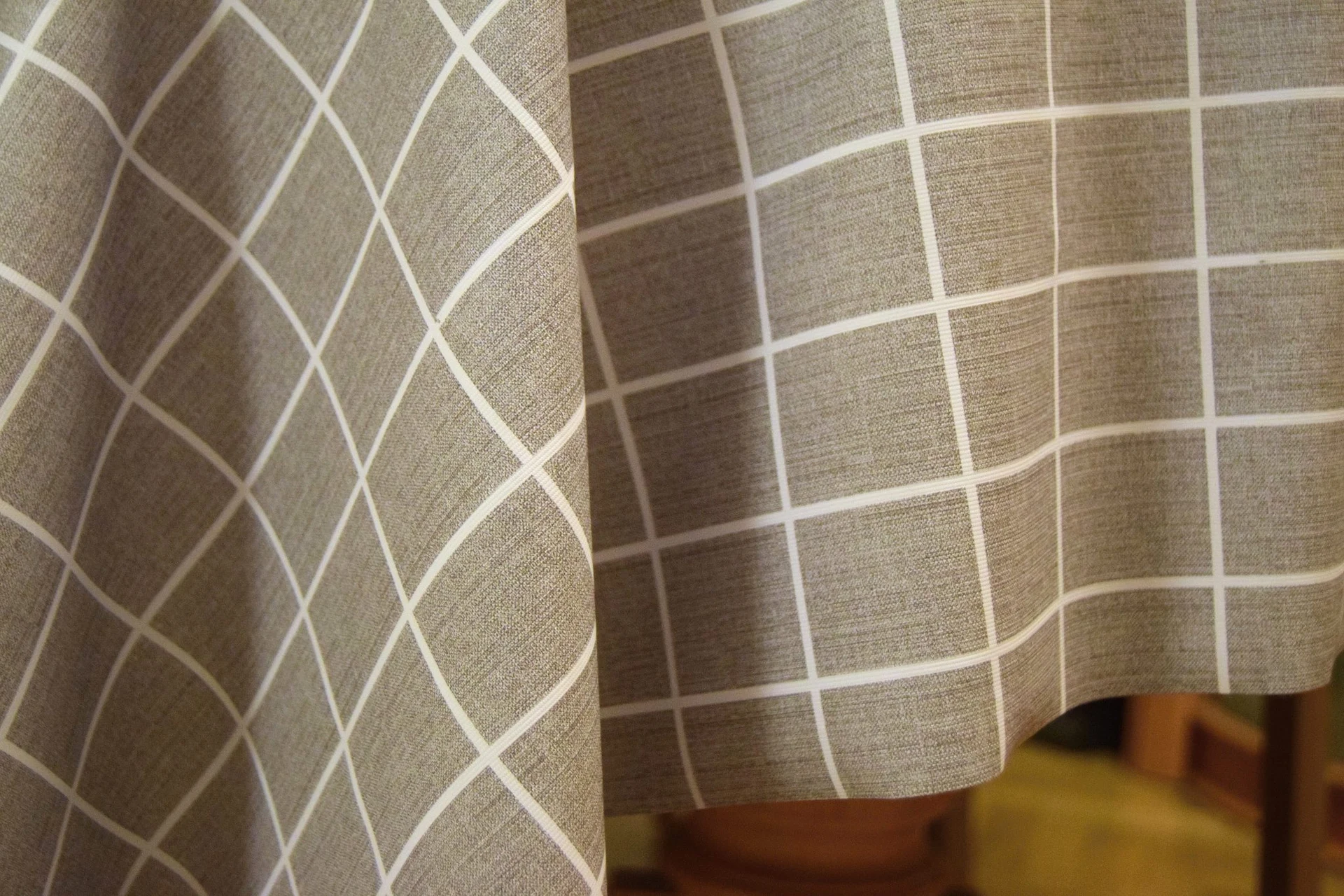
If a square tablecloth sits diagonally on a square table, its points may hang towards chairs centred on each side. Clear the table, then turn the cloth so its edges follow the table edges. Centre it before sitting down again: the points should now be towards the table corners.
This is a way to move a troublesome point. If an entire hanging edge rests in your lap, the amount of overhang may still be a problem after the turn.
Square table: move the points away from the chairs
Picture a square cloth turned so it looks like a diamond against the square tabletop. Each point faces the middle of a table side. If that point extends beyond the tabletop, it hangs towards the chair in front of it.
Try this comparison with the same cloth:
- Remove the tableware and decorations before moving the fabric.
- Turn the cloth until its edges run parallel to the table edges.
- Adjust it so the overhang looks even on opposite sides.
- Pull in a side-centred chair and sit down. Compare the fabric in front of your knees with its previous position.
The pointed corner has moved towards a table corner, leaving a straighter cloth edge in front of the chair. That edge may still reach your legs, but you can now distinguish a misplaced point from an overall drop you find too long.
This example assumes chairs at the middle of the table sides. If someone sits at a corner, the aligned cloth may put a point in front of them instead. Arrange it around the seats you actually use.
Rectangular table: check which way the cloth runs
Start with the cloth’s longer sides alongside the table’s longer sides. Centre it across the width and then along the length.
For comparison, imagine the same cloth turned across the table, with its longer dimension spanning the table’s narrower width. In that position, more fabric extends towards the side chairs and less towards the ends. A quarter-turn moves that coverage towards the ends instead.
Whether either position suits the seats depends on the cloth and table dimensions. After turning it, check the end chairs as well as the side chairs; moving fabric away from one seat can bring it towards another.
Finish the adjustment before setting the table
With the cloth centred, sit in the positions people will use. If only one side has an excessive drop, check whether the cloth has slipped off-centre. If the hanging edges still gather in everyone’s laps, turning and centring have not resolved the excess overhang. Use a different cloth for that meal rather than expecting another small adjustment to remove it.

Colorful Christmas Decor Without Changing Your Whole Interior
Introducing bright holiday color into a neutral or curated room works like styling a wardrobe: repeat a single accent shade across a few…

Arrange an Accessory Tray Around the Pieces You Reach for First
Give everyday accessories distinct places instead of letting them collect in one dish. This reach-first layout uses separate zones, a simple retrieval test…
Set Up a Getting-Ready Surface That Clears Away After Use
A shared table can serve as a temporary getting-ready spot if the whole setup has somewhere to go afterward. Build a portable tray,…