How to Compare Cushion Fabric Samples Against Your Sofa
Give two cushion fabrics the same sofa position, compare them flat and upright, and record which suits your aim. Assess a proposed border separately.
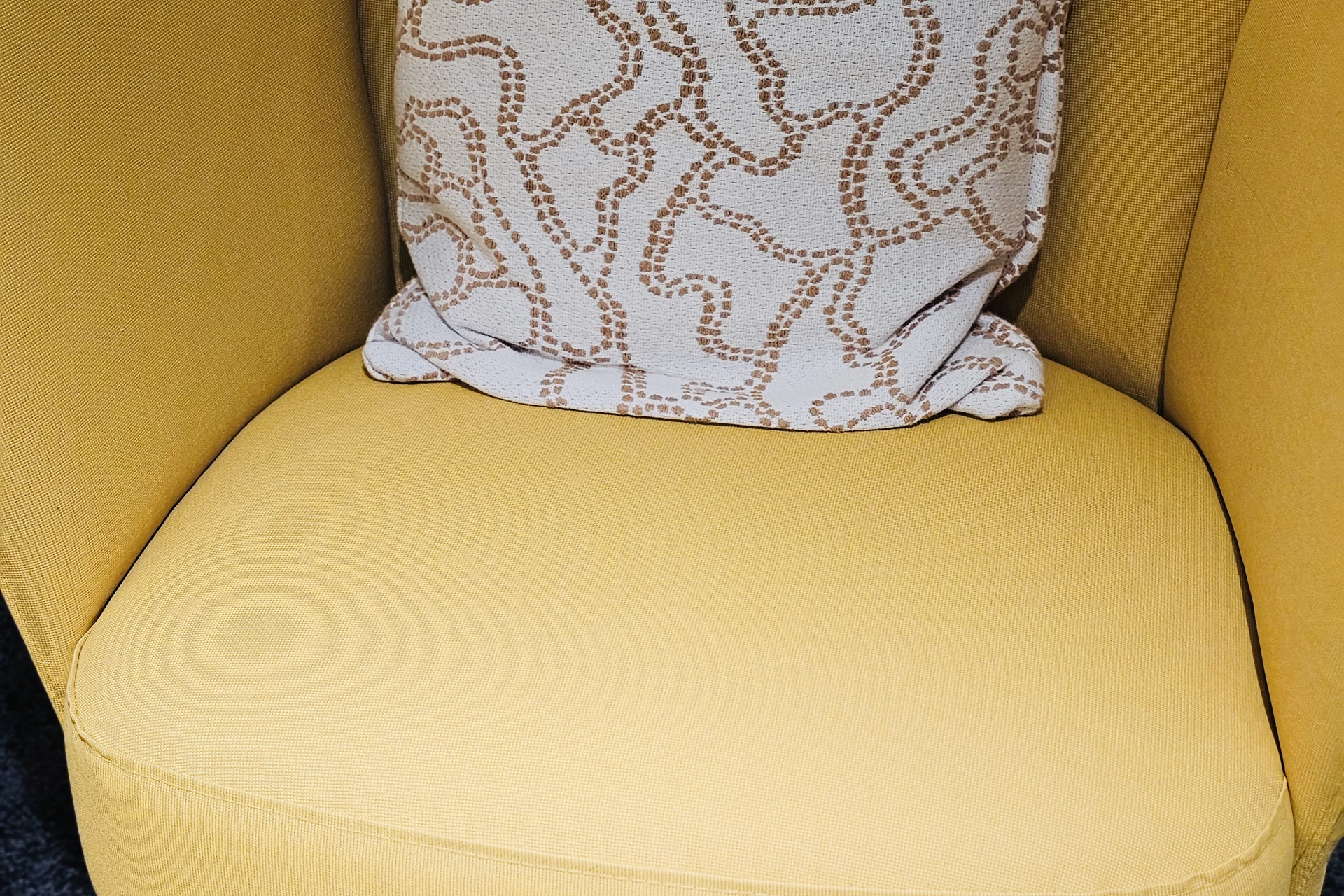
Put two cushion fabric samples in the same sofa position in turn, first flat on the seat and then upright against the back. Compare them from your usual view of the sofa as well as close up. Finish with a short choice note: which fabric you prefer, what you want it to contribute, and what the sample leaves unresolved.
Give both fabrics the same position
Choose the spot the cushion will occupy: beside an arm, in a corner or near the centre. Remove the cushion you intend to replace, but keep any throw that will remain in the finished arrangement.
- Start flat. Lay the samples beside each other on the seat without overlapping. Swap their places so each sits beside the same area of upholstery.
- Try them upright. Place each sample in turn against the sofa back at the intended cushion position. Use the same support for both. If you use an existing cushion, keep any uncovered fabric the same in both comparisons.
- Compare from your usual view. Return to the doorway or chair from which you normally see the sofa. Note what you can pick out in each sample: colour, pattern, an edge or little distinction from the upholstery.
- Return to the seat. Decide whether the detail you like nearby also matters to your choice, even if you cannot pick it out farther away.
A small swatch represents a patch of fabric, not the area of a finished cushion. Use this exercise to compare the samples in context; leave the overall cushion effect undecided where the sample cannot show it.
Keep border and pattern questions separate
If you are considering a contrasting border, place a sample of that fabric beside the main sample at roughly the intended visible width. Compare the pairing close up and from your usual viewing position. This is a colour arrangement, not a reproduction of a finished seam or piping.
If only part of a pattern appears on the swatch, record that limitation. Ask the supplier for an image showing the full repeat, a larger sample or an example of the proposed cushion layout before deciding how the pattern should sit on the cushion front.
Write a choice you can act on
Imagine an olive sofa with two options: plain cream fabric and cream fabric with a fine olive pattern. Your note might read: “Choose plain cream because I want a distinct pale accent from the doorway. Keep the border in the same fabric. Confirm the cushion dimensions before ordering.”
For a quieter addition, the same comparison might lead you to the patterned option instead. Record the effect you want rather than declaring one fabric the better match.
Keep the chosen sample’s supplier name and fabric reference with the note. List any unanswered request separately, such as “need to see the full pattern repeat”. That gives you a specific next step instead of starting the comparison again with more samples.

Colorful Christmas Decor Without Changing Your Whole Interior
Introducing bright holiday color into a neutral or curated room works like styling a wardrobe: repeat a single accent shade across a few…

Arrange an Accessory Tray Around the Pieces You Reach for First
Give everyday accessories distinct places instead of letting them collect in one dish. This reach-first layout uses separate zones, a simple retrieval test…
Set Up a Getting-Ready Surface That Clears Away After Use
A shared table can serve as a temporary getting-ready spot if the whole setup has somewhere to go afterward. Build a portable tray,…